6 Important ANSI/ACCT 03-2019 Standards for Challenge Courses and Zip Lines
If you own, manage, or are planning a challenge course, aerial adventure park, or zip line, you have probably heard people mention the ANSI/ACCT 03-2019 standards.
A lot of people know the name of the standard without really understanding what it means for their course, their staff, or their long-term risk.
These standards aren't just technical rules sitting in a binder. They shape how a course should be designed, built, inspected, maintained, and operated. They affect safety. They affect liability. They affect guest experience. And they affect whether your course stays in service or becomes a growing problem.
At Challenge Design Innovations, we have been in business for more than 45 years. Our team has been part of writing and implementing the standards, and we are an ACCT International Accredited Vendor confirmed to meet the standards in our design, building, inspecting, and staff training for challenge courses, aerial adventure parks, and zip lines.
That experience has taught us something important.
The standards are only useful if you actually follow them.
So here are six ANSI/ACCT 03-2019 standards every owner and operator should know, and why they matter in the real world.
1. Proof matters, accreditation is stronger than claims
One of the biggest lessons owners should understand is this:
Not every company that says they follow ANSI/ACCT 03-2019 has actually proven it.
In this industry, plenty of companies can say the right words. They can say they design to the standards. They can say they build to the standards. They can say safety matters to them.
But saying it and proving it are not the same thing.
Why ACCT International accreditation matters
In our opinion, one of the most important things a buyer can understand is the value of ACCT International accreditation.
Accreditation means an independent third party has come to your company, visited several projects sites your company worked on, and confirmed that you are actually following the standards consistently. That is very different from simply being a member of an association or putting a claim on your website.
Membership is not proof.
Accreditation is proof.
And when you are trusting someone to design, build, inspect, or train staff on a challenge course or zip line, proof should matter.
2. ANSI/ACCT 03-2019 applies to more than just construction
A lot of people hear the word “standards” and think only about how a course gets built.
That's too narrow.
ANSI/ACCT 03-2019 affects much more than the opening phase of a project. It shapes design decisions, construction methods, inspections, staff training, and long-term operations.
That broader view is where smart owners separate themselves from the rest.
Standards affect the full life of the course
A course is not a one-time product.
It is an ongoing operation.
That means the standard matters not only when the course is first built, but also as it ages, gets used, gets exposed to weather, sees staff turnover, and goes through years of day-to-day wear.
A course can look great on opening day and still become unsafe over time if inspections are skipped, staff training gets skipped, or maintenance falls behind.
That is why standards should be part of your long-term operating mindset, not just your construction checklist.
3. Annual inspections are critical, but they are not the whole picture
If there is one issue our inspection team sees over and over, it's this:
Too many owners treat inspection like a once-a-year box to check.
That's not enough.
We regularly find older courses that don't meet the standard. We find safety violations. We find construction styles that don't meet the current standard. We find courses in poor condition, sometimes extreme disrepair, and not safe for use. And in too many cases, we find courses that have not had the required yearly inspections at all.
Pre-use and monthly inspections matter too
Yearly third-party inspections are essential.
But so are the inspections handled by the owner/operator.
That includes pre-use inspections and monthly inspections. These routine checks are part of responsible operations, and they help catch problems before they grow into expensive repairs, downtime, or safety issues.
This is where good operators stand out.
They don't rely on one annual visit to tell them everything is fine. They build inspection habits into normal operations.
Safety lives in the daily and monthly follow-through, not just the yearly report.
4. Older courses can become serious risks if they are not kept up
One of the most common and dangerous misunderstandings in this industry is the idea that an older course must be fine because it is still standing and still being used.
That is not a safe assumption.
Our inspection team regularly sees older courses with safety concerns, outdated construction styles, and clear signs of neglect. Some have gone too long without proper inspections. Some have wear issues that should have been addressed much earlier. Some are simply in poor condition and not safe for continued operation.
Age does not equal compliance
A course does not stay compliant just because it has history.
Materials age. Environments change. Hardware wears. Wood changes. Usage patterns shift. Staff knowledge comes and goes. And small issues can turn into major issues when nobody catches them early.
This is one reason ANSI/ACCT 03-2019 matters so much.
It pushes owners to look at what is true now, not what may have been true years ago.
And that mindset can prevent serious problems.
5. Staff training is a core part of course safety
Some owners focus heavily on the course structure itself but don't give enough attention to the people running it.
That's a mistake.
You can have a well-built course and still have unsafe outcomes if your staff are not properly trained. Good operations depend on people knowing what to look for, what to document, what to report, and how to respond.
Training supports safer operations over time
When we talk about challenge course standards, we are also talking about operational discipline.
Staff training supports pre-use inspections. It supports consistent decision-making. It supports better awareness. And it supports safer guest experiences.
It is not just a side item.
It is one of the systems that helps the whole operation work.
That is why we always encourage owners to think beyond the physical build and pay close attention to the long-term operation of the course, including staff training, routine inspections, and third-party annual inspections.
6. The best owners think beyond opening day
A lot of buyers put most of their attention on getting the course designed and built.
We get it.
But the strongest operators think further ahead. They ask what it will take to own and operate the course responsibly for years.
That's the right question.
Because long-term success is not just about getting through installation. It is about having the systems, budget, inspections, maintenance, and training in place to keep the course usable over time.
ANSI/ACCT 03-2019 supports better long-term decisions
In our view, one of the biggest benefits of ANSI/ACCT 03-2019 is that it pushes owners to think long term.
Not just about launch day.
Not just about the first season.
But about the full life of the course.
What challenge course owners and operators should do next
If you own or operate a challenge course, aerial adventure park, or zip line, here is the simple version:
Choose vendors who can prove they follow ANSI/ACCT 03-2019.
Take ACCT International accreditation seriously.
Don't treat inspections as optional.
Stay consistent with yearly third-party inspections, plus pre-use and monthly inspections. And document those.
Don't assume an older course is still safe just because it has been there for years.
And do not treat staff training like an extra expense.
Those are not side issues.
They are the foundation of a safe, sustainable operation.
Final thoughts on ANSI/ACCT 03-2019
The reason ANSI/ACCT 03-2019 matters is simple.
It helps turn safety from a vague promise into something real.
After 45 plus years in this industry, we believe one of the most important differences in this business is independent verification. That is why ACCT International accreditation matters so much to us. It means a third party has visited our company, reviewed our projects, and certified that we are actually doing the work to the industry standards.
That kind of proof matters.
Because when you are building, inspecting, and operating challenge courses, aerial adventure parks, and zip lines, safety shouldn't rest on marketing language alone.
Experience the thrill of Outdoor Recreation at Augusta University | In the Wild
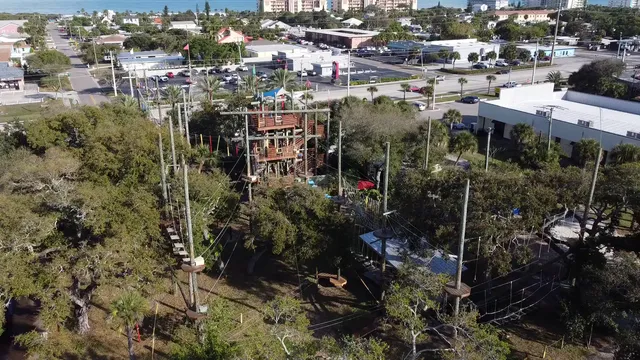
Adventure show features ziplining park in Brevard County