College and University
College and University Challenge Course and Aerial Adventure Park Design and Construction
Build an Outdoor Program That Supports Student Life, Leadership, Recreation, and Campus Engagement
A well-designed aerial adventure park can become much more than a recreation feature.
It can support student orientation, leadership development, outdoor recreation, wellness programs, team building, academic classes, staff training, alumni events, and community outreach.
Challenge Design Innovations designs and builds custom aerial adventure parks for colleges and universities across the United States.
We help campus recreation teams, student affairs departments, outdoor programs, facilities departments, risk managers, and university leadership move from an early idea to a completed course, staff training, inspection, and long-term support.
Explore Our University Projects
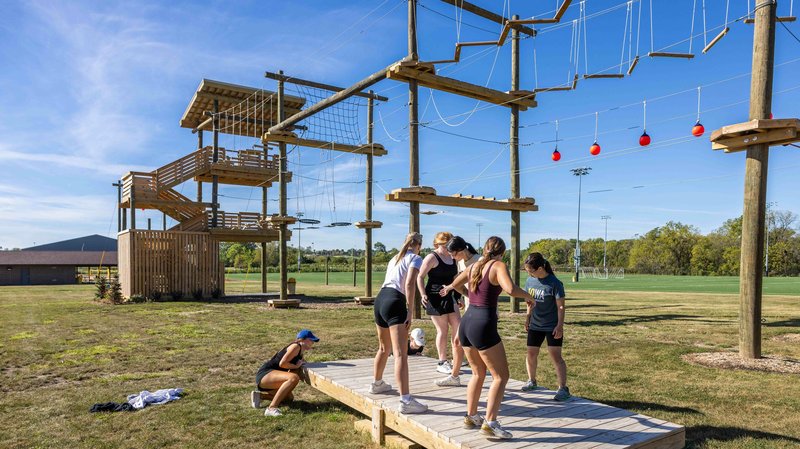
Aerial Adventure Parks Built for Campus Needs
Colleges and universities often need one facility to serve many different groups.
Your course may support:
- Student orientation programs
- Outdoor recreation
- Leadership development
- Team building
- Residence life
- Academic classes
- ROTC
- Campus wellness programs
- Student organizations and clubs
- Faculty and staff development
- Alumni events
- Summer camps
- Community groups
- Corporate programs
- K-12 outreach
That creates a different design challenge than building a public attraction.
Your course must be engaging, but it also needs to be practical for campus staff, adaptable for different programs, manageable within university risk procedures, and supportable for years to come.
CDI helps you plan for those needs from the beginning.
Is Your Current Facility Meeting Campus Needs?
Many colleges and universities contact us because their existing course no longer supports the programs they want to offer.
Common concerns include:
- An aging challenge course
- Limited student participation
- Outdated elements
- Rising maintenance needs
- Poor documentation
- Difficult staff supervision
- Low program capacity
- A course designed for only one type of activity
- Equipment that no longer fits current program needs
- A facility that is difficult to inspect or maintain
- A course that does not serve students with different ability levels
- A need to replace, expand, or remove older structures
Other universities are starting from the beginning and need help determining whether an aerial adventure park is the right investment.
We can help with both.
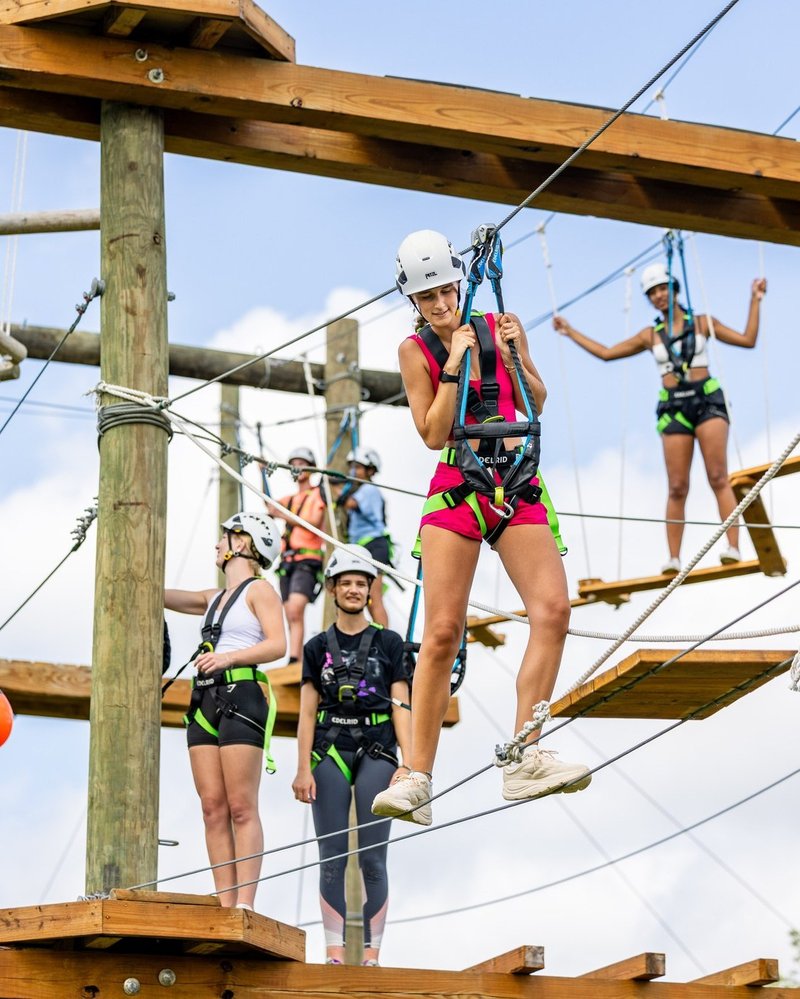
A Full-Service Partner for University Adventure Programs
CDI provides planning, design, engineering coordination, construction, installation, training, inspection, equipment, repair, maintenance, and old course removal.
That gives your school one experienced partner throughout the life of the facility.
Campus Site and Feasibility Review
The first step is understanding your property, program goals, users, staffing model, and university approval process.
Our team can help evaluate:
- Available campus property
- Trees, terrain, soil, drainage, and access
- Proximity to recreation facilities
- Student transportation and parking
- Emergency vehicle access
- Expected program size
- Staffing and supervision needs
- Intended academic and recreation uses
- Accessibility goals
- Potential for future expansion
- Engineering requirements
- Campus facilities standards
- Local permitting requirements
We also consider how the site may affect nearby buildings, trails, utilities, athletic facilities, and other campus uses.
Custom Course Design
Your course should reflect the way your university plans to use it.
CDI can design:
- Aerial adventure parks
- High ropes courses
- Low challenge courses
- Leadership development courses
- Zip lines
- Climbing towers
- Outdoor climbing walls
- Outdoor bouldering structures
- Team development elements
- ROTC and tactical training structures
- Children’s courses for camps or outreach programs
- Hybrid facilities with several activity types
Courses can be designed for facilitated programs, open recreation, academic use, staff development, or a combination of uses.
We can also design beginner, intermediate, and advanced routes to serve participants with different experience and comfort levels.
Engineering and University Project Coordination
University construction projects often involve several departments and approval steps.
Your project may require coordination with:
- Campus recreation
- Student affairs
- Facilities management
- Risk management
- Procurement
- Legal counsel
- Campus planning
- Environmental health and safety
- Accessibility services
- University leadership
- Architects and engineers
- Local authorities
CDI develops the specialized course design and coordinates the engineering needed for the project.
We can also provide information for internal reviews, purchasing processes, RFPs, RFQs, planning meetings, and capital project discussions.
Construction and Installation
Our construction teams build custom aerial adventure parks, challenge courses, zip lines, climbing structures, and related facilities on college and university campuses in all 50 States.
Depending on the project, construction may include:
- Utility poles and structural towers
- Tree-mounted platforms
- Foundations and anchors
- Steel cables and life-safety systems
- High and low challenge elements
- Aerial bridges and obstacles
- Zip lines
- Climbing structures
- Belay systems
- Rescue access features
- Staff access systems
- Participant staging areas
We build with long-term campus use in mind.
That means considering inspections, staff access, maintenance, rescue procedures, supervision, and future upgrades during the design and construction process.
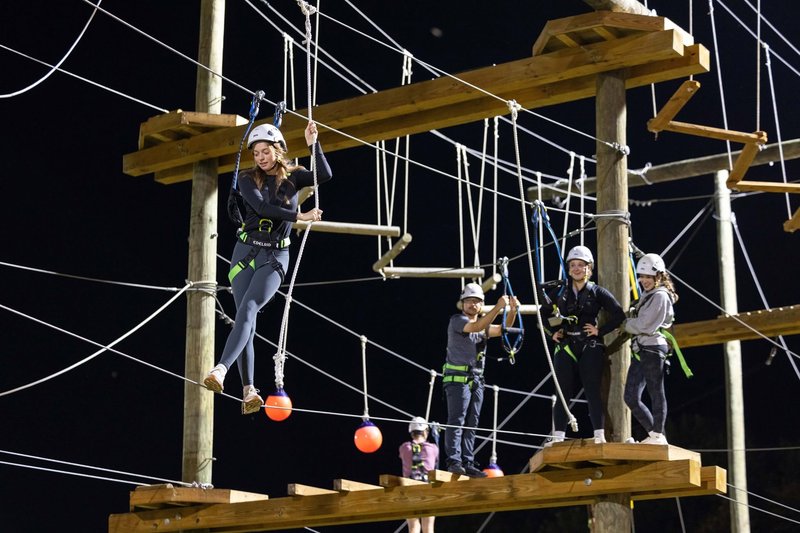
Designed for Students, Staff, and Program Leaders
A successful campus course must work for the people using it and the people responsible for operating it.
CDI designs around:
- Student experience
- Program learning outcomes
- Staff supervision
- Instructor visibility
- Guest flow
- Group size
- Rescue access
- Daily inspections
- Annual inspections
- Staff training
- Equipment management
- Course maintenance
- Program flexibility
- Future expansion
A course may look impressive, but if it is difficult to staff or maintain, it can become a burden on the department responsible for it.
Our goal is to help you create a facility your team can operate with confidence.
Support Student Learning and Development
Aerial adventure parks and challenge courses can support a wide range of student outcomes.
Programs may focus on:
- Communication
- Trust
- Leadership
- Problem-solving
- Decision-making
- Group development
- Confidence
- Resilience
- Physical activity
- Outdoor skills
- Risk management
- Experiential education
The facility itself does not create these outcomes.
The design, programming, facilitation, staff preparation, and operating procedures all play an important role.
CDI helps universities think through how the physical course will support the programs they plan to deliver.
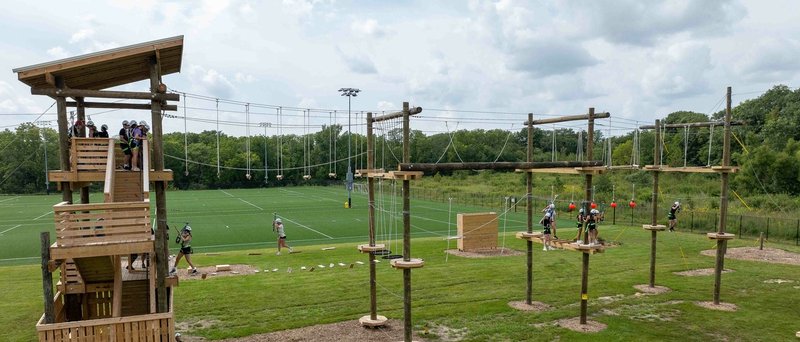
Support More Than One Campus Department
A well-planned facility can serve several departments and help strengthen internal support for the project.
Campus Recreation
Provide students with outdoor recreation, climbing, team-building, and adventure-based programming.
Student Affairs
Support orientation, student leadership, residence life, retention efforts, and campus engagement.
Academic Programs
Create learning opportunities for recreation, outdoor education, kinesiology, psychology, leadership, risk management, and related courses.
ROTC and Military Programs
Develop physical training, leadership, problem-solving, and team-based training structures.
Athletics
Offer team development, communication, and preseason or off-season programming.
Faculty and Staff Programs
Provide professional development, wellness, and team-building opportunities.
Summer and Community Programs
Serve youth camps, school groups, nonprofits, corporate groups, and community organizations during periods of lower student use.
University Course Renovation and Replacement
Some campus courses were built years ago for programs that have since changed.
Your university may not need a completely new facility.
CDI can evaluate whether an existing course may benefit from:
- Repairs
- Replacement elements
- New platforms
- Updated cables or hardware
- Improved staff access
- Better rescue access
- New belay systems
- Expanded programming options
- Additional zip lines
- New low-course elements
- A climbing tower or wall
- Updated documentation
- Partial removal
- Full course replacement
We inspect and repair many courses originally built by other companies.
Our team can help you understand what may be retained, what should be updated, and when replacement may be the more practical choice.
Staff Training for University Programs
A quality course depends on trained staff.
University programs may rely on full-time staff, graduate assistants, student employees, seasonal employees, instructors, or a combination of roles.
CDI provides site-specific training based on your course, equipment, operating procedures, and program goals.
Training may include:
- Course operation
- Equipment use
- Participant orientation
- Belay procedures
- Facilitation
- Daily inspections
- Staff supervision
- Emergency procedures
- Rescue skills
- Documentation
- Program-specific operating practices
We can also provide refresher training as staff members change and programs grow.
Inspection, Maintenance, and Long-Term Support
Campus facilities need ongoing care.
CDI can continue supporting your university through:
- Annual professional inspections
- Periodic inspections
- Repairs and maintenance
- Replacement hardware
- Replacement elements
- Staff retraining
- Equipment supply
- Operations reviews
- Post-incident reviews
- Course modifications
- Expansion projects
- Course removal
We also supply harnesses, helmets, trolleys, carabiners, gloves, tethers, and other equipment used by university adventure programs.
Many of our university clients continue working with CDI year after year.
Why Colleges and Universities Choose Challenge Design
More Than 45 Years of Experience
Challenge Design has designed and built challenge courses, zip lines, climbing facilities, and aerial adventure parks since 1980.
Our team understands both the physical structure and the program needs behind it.
ACCT International Accredited
CDI has maintained ACCT International accreditation for more than 26 years.
Accreditation involves an outside review of a company’s policies, documentation, completed work, and ability to provide accredited services.
For universities, this provides an added level of confidence during planning, procurement, risk review, and vendor selection.
Experience With Higher Education Clients
CDI has completed dozens of projects for colleges and universities across the country.
Our work includes campus recreation facilities, challenge courses, zip lines, climbing structures, leadership programs, and specialized training courses.
Full-Service Support
We can support your university from early planning through construction, training, inspection, repair, and future expansion.
That reduces the need to coordinate several unrelated vendors.
Experience With Institutional Processes
University projects often involve formal purchasing procedures, multiple reviewers, documentation requirements, and longer approval timelines.
We understand that the final decision may involve more than the department using the course.
Our team can provide the information needed to support internal planning and procurement.
Featured College and University Projects
Augusta University
Challenge Design worked with Augusta University on its campus challenge course, which supports outdoor recreation, team development, student programs, and community use.
[View the Augusta University Project]
Louisiana State University
LSU’s challenge course supports University Recreation programming, group development, leadership, and experiential learning.
University of Iowa
CDI designed and built adventure-based facilities that support campus recreation and student programming at the University of Iowa.
[View the University of Iowa Project]
Florida State University
CDI has supported challenge course and outdoor programming needs at Florida State University.
[View the Florida State University Project]
Other Higher Education Clients
Our university experience also includes projects for institutions with campus recreation, leadership, outdoor education, and military training programs.
Planning a New Campus Adventure Facility
You do not need to have the entire project figured out before contacting us.
It does help to know:
- The departments that may use the facility
- The intended location options
- Does the university controls the site
- The primary student and program goals
- Expected group sizes
- Staffing availability
- The desired opening date
- The estimated budget range
- If funding has been identified
- If the project will require an RFP or RFQ
We can help your team determine what type of facility may best fit your goals, property, staffing model, and available funding.
How Much Does a University Aerial Adventure Park Cost?
The cost depends on the type of facility, site conditions, course size, structure, element count, engineering requirements, equipment, training, and level of customization.
Important cost factors include:
- Aerial park, high course, low course, or hybrid design
- Tree, pole, or tower construction
- Number of elements
- Desired participant capacity
- Site access
- Soil and foundation requirements
- Belay systems
- Zip lines
- Climbing structures
- Engineering
- Permitting
- Staff training
- Participant equipment
- Supporting site improvements
A preliminary budget should consider the complete project, not only the physical construction.
Ask whether a proposal includes:
- Design
- Engineering
- Construction
- Training
- Equipment
- Commissioning inspection
- Travel
- Site work
- Annual inspection
- Maintenance
- Replacement parts
[Start with our Project Price Estimator]
Questions to Ask a University Challenge Course Builder
Before selecting a builder, ask:
- Are you an ACCT International Accredited Vendor?
- Have you completed similar college or university projects?
- Can you provide higher education references?
- Can you support university procurement requirements?
- Who provides the engineering?
- Does the proposal include staff training?
- Does it include a commissioning inspection?
- How does the design support supervision and rescue?
- Can the course serve multiple campus departments?
- How will future inspections and repairs be handled?
- Can you inspect or modify structures built by another company?
- Can the course be expanded later?
- What project costs are not included?
- Can you assist with an RFP or RFQ response?
A qualified builder should be able to explain the full life cycle of the facility, not only the construction phase.
Our University Project Process
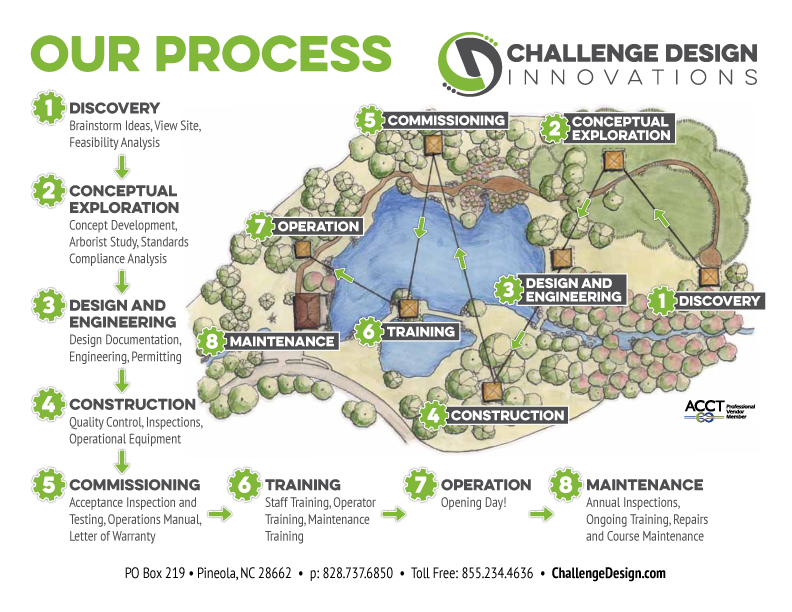
1. Initial Consultation
We discuss your campus, program goals, users, site, timeline, funding, and approval process.
2. Site and Program Review
We review the proposed location, intended programming, staffing needs, and likely project constraints.
3. Concept Development
Our team develops a concept based on your academic, recreation, leadership, or training goals.
4. Internal Planning Support
We provide information your team can use for budgeting, stakeholder discussions, capital planning, procurement, and project approval.
5. Design and Engineering
CDI develops the specialized course design and coordinates the required engineering.
6. Construction
Our experienced team constructs and installs the facility on your campus.
7. Inspection and Training
The completed course goes through the appropriate inspection process, and your staff receives site-specific training.
8. Ongoing Support
CDI remains available for inspections, equipment, repairs, retraining, additions, renovations, and long-term planning.
Book a College or University Project Consultation
Choose a time that works for your team and tell us a little about your university, site, programs, and project goals.
The information you provide will help us prepare for a more useful discussion.
Frequently Asked Questions
Can an aerial adventure park support academic programs?
Yes. Universities may use challenge courses and aerial facilities for recreation, leadership studies, experiential education, outdoor education, kinesiology, psychology, risk management, and related programs.
Can one course serve several departments?
Yes. A thoughtfully planned course can support campus recreation, student affairs, academic classes, athletics, ROTC, residence life, staff development, summer programs, and community groups.
Can CDI replace an older university challenge course?
Yes. CDI can evaluate existing structures and recommend repairs, renovations, partial replacement, complete replacement, or removal.
Does CDI inspect courses built by other companies?
Yes. CDI can inspect many courses built by other providers. Available services depend on the structure, condition, documentation, and project needs.
Can you help with an RFP or RFQ?
Yes. CDI can provide qualifications, scope information, project examples, references, and other materials needed for formal purchasing processes.
Does CDI provide staff training?
Yes. CDI provides site-specific training for full-time staff, student staff, seasonal staff, instructors, and other program employees.
Can a course be designed for open recreation and facilitated programs?
Yes. The design can support several operating models, but those goals should be identified early because they affect staffing, supervision, capacity, equipment, and course layout.
Can CDI help evaluate a possible site?
Yes. CDI can review site information, plans, photos, surveys, program goals, and other details. Some projects may also require an onsite visit.
How long does a university project take?
The timeline depends on internal approval, funding, procurement, design, engineering, permitting, construction, weather, and training. Universities should begin planning well before the desired opening date.
Does CDI provide equipment?
Yes. CDI and High Country Hardware provide commercial harnesses, helmets, carabiners, trolleys, gloves, tethers, and other equipment for campus adventure programs.
Can the course be expanded later?
Yes. Future expansion can often be included in the original planning process. This can help the university add capacity, new elements, or additional program options later.
Does CDI provide long-term service?
Yes. CDI provides annual inspections, repairs, maintenance, staff retraining, equipment, operations reviews, renovations, expansions, and course removal.