Observation Tower Design & Construction
Custom Viewing Towers Designed for Parks, Trails, and Outdoor Destinations
Create a Destination Worth the Climb
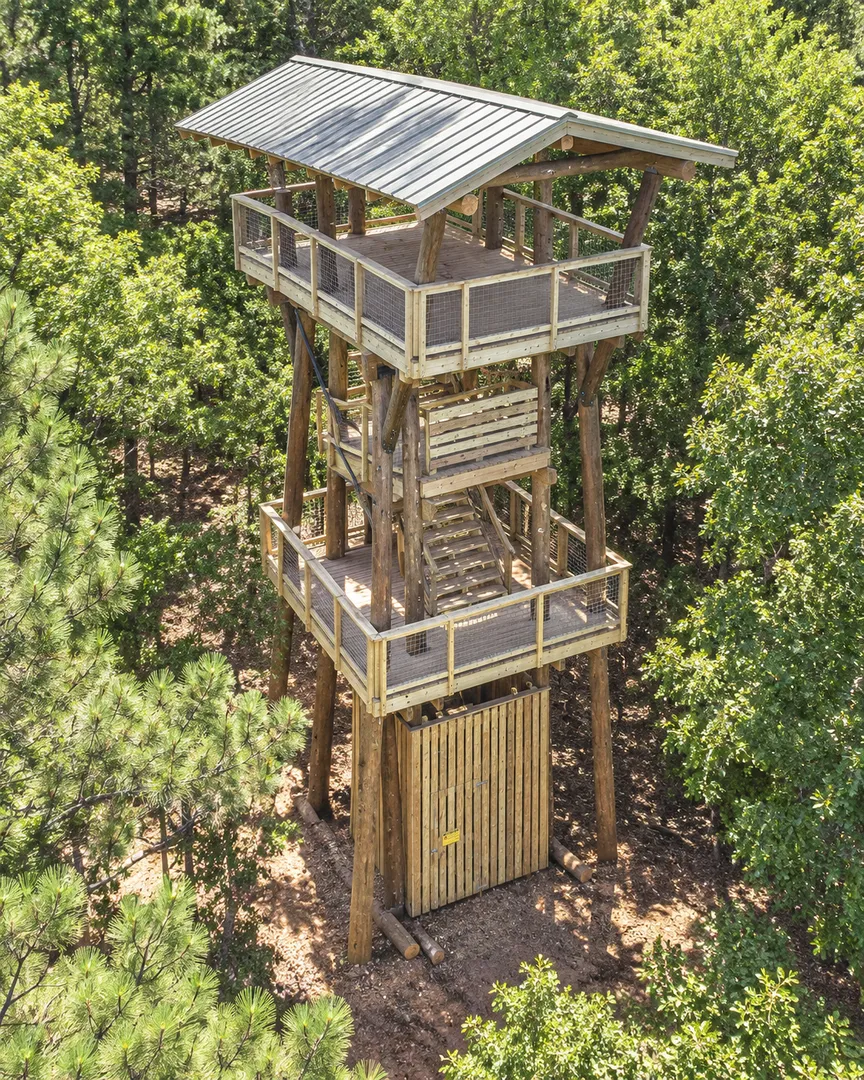
A great view can turn a trail, park, campground, or outdoor property into a destination.
Challenge Design Innovations designs and builds custom observation towers for parks, trail systems, camps, resorts, municipalities, recreation areas, and other public and private properties.
Most observation towers we build use a four-pole structure with multiple levels connected by staircases. The final height, platform sizes, materials, access, and layout depend on the property and what you want visitors to experience.
Some sites need a simple viewing platform above the tree line. Others call for a taller, multi-level tower that becomes a recognizable feature of the property.
We design around the site rather than forcing the site to fit a standard tower.
Planning an observation tower? Talk with CDI about your property, goals, and budget.
What Is an Observation Tower?
An observation tower is an elevated structure designed to give visitors a better view of the surrounding landscape.
Unlike a ropes course tower or zip line tower, the primary purpose is not an adventure activity. It is to provide access to an elevated viewing area using stairs and platforms.
Observation towers can create views of:
- Mountains and ridgelines
- Lakes and rivers
- Forests and wetlands
- Wildlife areas
- City skylines
- Parks and trail systems
- Historic or culturally significant landscapes
And sometimes the tower itself becomes part of the attraction.
Visitors may hike specifically to reach it, take photos from it, use it as a landmark, or make it the turnaround point or highlight of a trail.
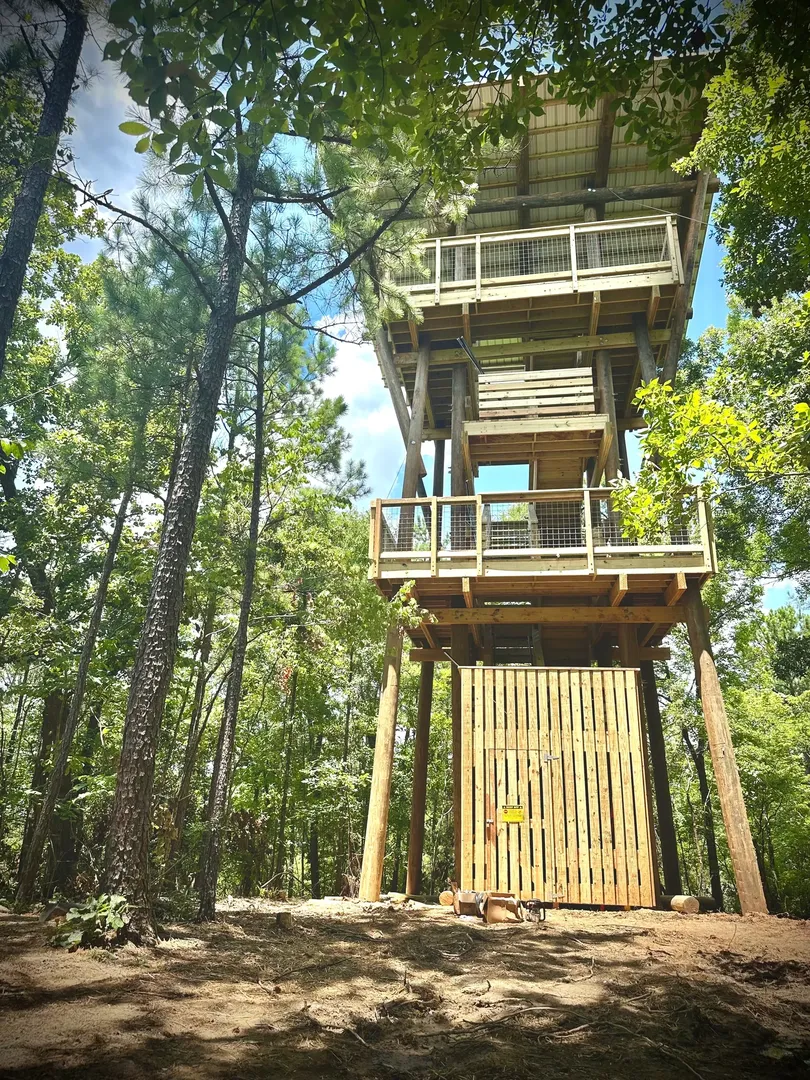
Custom Observation Towers Built for Your Property
There is no single observation tower design that works everywhere.
We start with the property.
Where is the best view?
How high does someone actually need to climb before the view opens up?
Can construction equipment reach the site?
What are the soil and foundation conditions?
How will people reach the tower?
How many visitors might use it at one time?
Those questions affect the structure, height, foundations, stairs, platforms, materials, and construction process.
A typical CDI observation tower may include:
| Structure | Four pole and other custom configurations |
| Height | Designed around the site and desired viewing elevation |
| Levels | Single or multiple intermediate platforms |
| Access | Staircases between levels |
| Viewing Area | Open upper observation deck |
| Railings | Designed for the intended public use |
| Entry | Open access or controlled |
| Gates | Locking doors or gates available |
| Materials | Selected based on design, location, exposure, and project requirements |
| Site Layout | Integrated with existing or planned trails and recreation areas |
The result should feel like it belongs where it was built.
Public Observation Towers With Controlled Access
Not every observation tower needs to remain accessible 24 hours a day.
For parks and other managed properties, we can incorporate access-control features and locking doors or gates into the tower design.
That gives your staff the ability to open the tower during normal operating hours and secure it when the property closes.
This can be particularly useful for:
- Municipal parks
- Trail systems
- Campgrounds
- Resorts
- Nature centers
- Summer camps
- Private recreation properties
- Attractions with established operating hours
We can discuss access control early in the design process so it becomes part of the structure rather than an afterthought later.
Observation Towers for Parks and Trail Systems
An observation tower can do more than provide a view.
It can give people a reason to explore more of a property.
Place a tower at the end of a hiking trail and it creates a natural destination. Put it at a high point within a trail network and it can become a landmark that helps define the property.
That is one of the reasons observation towers can work well for park systems.
They can complement:
- Hiking trails
- Mountain biking destinations
- Nature preserves
- Waterfront parks
- Wildlife viewing areas
- Campgrounds
- Outdoor education centers
- Scenic recreation areas
The tower becomes part of the overall visitor experience rather than simply another structure on the property.
Recent Project: Standing Boy Trails in Columbus, Georgia
One of our recent observation tower projects was built at Standing Boy Trails in Columbus, Georgia.
Standing Boy includes nearly 30 miles of natural-surface trails used for hiking, running, and mountain biking. Its trail network takes advantage of the property's ridges, forests, shoreline, and changing terrain.
The tower site sits at the high point reached by Tower Path and Beeline trails.
That made the location a natural fit for an observation tower.
Visitors travel through the trail system to reach the tower, climb the structure, and gain a different perspective on the surrounding property.
It is a good example of something we encourage clients to consider:
Don't think only about the tower. Think about the journey to the tower.
Where you place it can be just as important as how tall you build it.
How High Should an Observation Tower Be?
Higher isn't automatically better.
The right height depends on what is blocking the view and what you are trying to see.
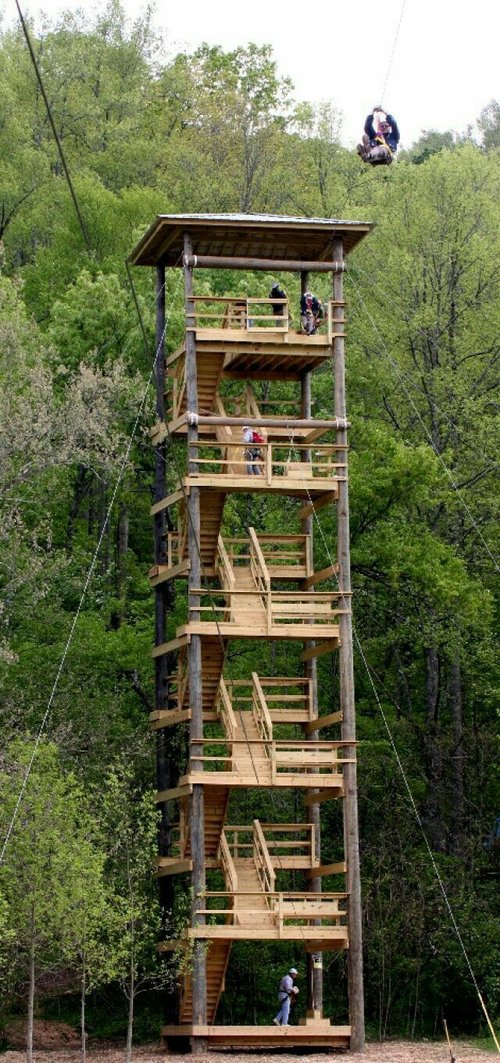
On one property, you may only need enough elevation to see over nearby vegetation. On another, a taller structure may be necessary to open views across a forest canopy or surrounding terrain.
Before determining tower height, consider:
Existing Elevation
A tower placed on a ridge or hill may require far less structural height than one constructed at a lower elevation.
Tree Canopy
If your goal is a view above the trees, existing and future tree height matters.
Desired View
Seeing a nearby lake requires a different design than creating a panoramic view across miles of surrounding landscape.
Visitor Experience
Intermediate platforms can provide different views as visitors climb and can make the ascent part of the experience.
Budget
Height affects materials, foundations, engineering, labor, equipment access, and construction complexity.
We would rather help you determine the height your property actually needs than simply build the tallest tower possible.
What Does an Observation Tower Cost?
There isn't a useful one-price answer because observation towers can vary considerably.
Some of the biggest cost factors include:
| Cost Factor | Why It Matters |
|---|---|
| Tower height | Taller structures generally require more material and construction time |
| Number of levels | Additional platforms and stairs add materials and labor |
| Foundation requirements | Soil and site conditions affect foundation design |
| Site access | Remote sites can make moving materials and equipment more difficult |
| Terrain | Steep or uneven sites can increase construction complexity |
| Engineering | Requirements depend on the structure and location |
| Materials | Material choices affect initial and long-term costs |
| Access control | Gates, doors, locks, and related features add to the scope |
| Site preparation | Clearing and construction access may be required |
| Location | Mobilization and site logistics affect project costs |
If you already have a budget range, tell us.
That helps us determine what type of tower may be realistic for your property before too much time is spent developing a concept that doesn't match your available funding.
Choosing a Location for an Observation Tower
One of the first questions we ask is simple:
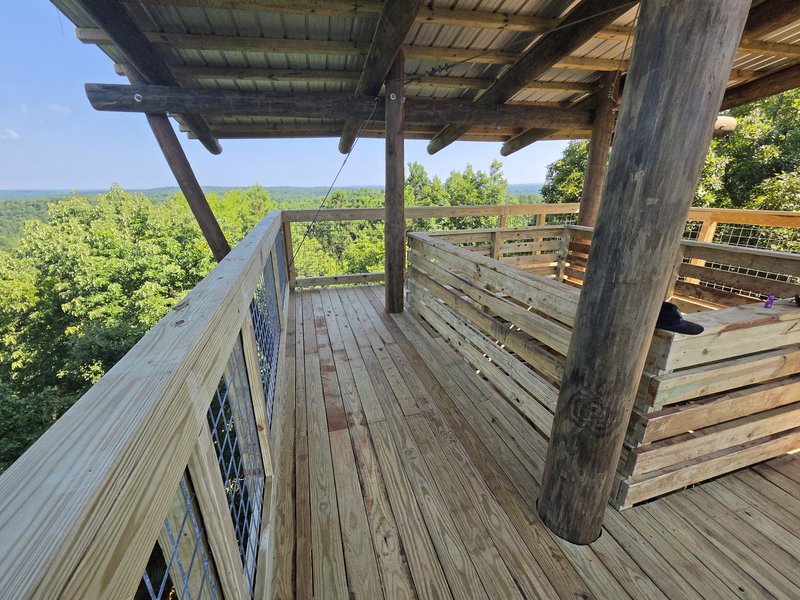
What do you want people to see?
Then we work backward from there.
A promising tower site usually needs to balance the view with practical construction and operational considerations.
We may look at factors such as:
- Existing topography
- Tree canopy
- Trail access
- Property boundaries
- Construction access
- Soil conditions
- Drainage
- Utilities
- Emergency access
- Visitor circulation
- Nearby roads or residences
- Desired tower height
- Environmental considerations
Sometimes the highest point on a property is the obvious location.
Sometimes it isn't.
A slightly lower location with better access, better sightlines, or more interesting scenery may create a better project.
Site Feasibility Checklist
What Should You Know Before Contacting an Observation Tower Builder?
You don't need construction drawings before talking with us.
A few basic pieces of information are enough to start a useful conversation.
Property Location
An address, parcel, trail map, or approximate tower location gives us somewhere to start.
What You Want Visitors to See
Tell us what makes the location special.
Approximate Height
If you have a height in mind, let us know. If you don't, that's fine too.
Expected Use
Will this be a heavily visited public park or a smaller private property?
Access Requirements
Should the tower always be open, or do you need to lock it after operating hours?
Budget
Even a general budget range helps us develop a realistic direction.
Timeline
Let us know whether the tower is part of a larger development, grant-funded project, park improvement, or planned opening.
From there, we can begin looking at what makes sense.
Why Challenge Design Innovations?
CDI has been designing and building elevated outdoor structures since 1980.
Our work includes challenge courses, aerial adventure parks, zip lines, climbing structures, towers, and other custom recreation projects across the United States.
That experience matters when a project combines height, public use, outdoor exposure, difficult terrain, and unusual construction access.
Our team can help with the process from early concept through construction.
And because we build custom projects, you aren't limited to choosing Tower A, Tower B, or Tower C from a catalog.
You and your property determines the design.
Start Planning Your Observation Tower
Wondering what it might cost? See ourPrice Estimator
Ready to take the next step?
Contactus today to explore how we can help you create a world-class challenge course that meets your needs and inspires your participants.
Is your property a good fit? Use our Site Feasibility Checklist to find out