Commercial Zip Line Design & Construction
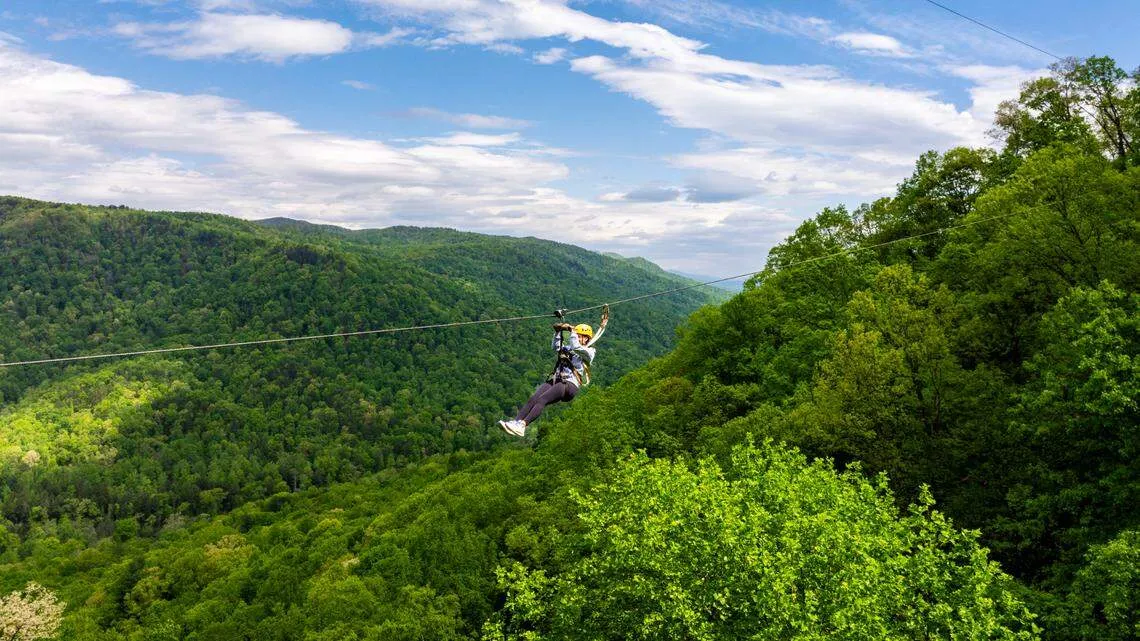
Custom Zip Lines and Canopy Tours Built Around Your Site, Goals, and Budget
Challenge Design Innovations [CDI] designs and builds commercial zip lines for camps, parks, universities, resorts, municipalities, adventure attractions, and other organizations across the United States.
From a single recreational zip line to a large multi-line canopy tour, we help you determine what makes sense for your property, your participants, your operation, and your available budget.
And we can stay involved well beyond construction.
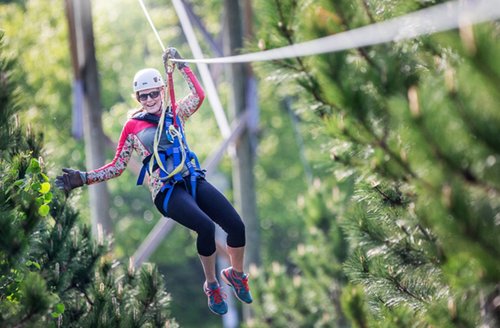
CDI can help with:
| Your Project Needs | How CDI Can Help |
| --- | --- |
| Early planning | Site review, feasibility, concepts, and budget guidance |
| Design | Course layout, structures, platforms, braking systems, and engineering coordination |
| Construction | Complete commercial zip line installation |
| Opening preparation | Equipment, staff training, documentation, and commissioning support |
| Long-term operation | Inspections, maintenance, repairs, upgrades, and replacement equipment |
Building or planning a commercial zip line?
You do not need to have the entire project figured out before contacting us. Tell us about your property, goals, and approximate budget. We can help you determine what is realistic.
[TALK WITH CDI ABOUT YOUR ZIP LINE PROJECT]
Commercial Zip Line Builders With 45+ Years of Experience
CDI's roots in the challenge course industry go back to 1980, when founder Jim Wall built his first ropes course and zip line at San Lee Park in North Carolina.
More than 45 years later, our team continues to design and build zip lines, canopy tours, challenge courses, and aerial adventure parks across the country.
That experience matters when you are building something that needs to work not only on opening day, but years later.
A good zip line design considers much more than the cable itself.
It needs to account for terrain, structures, braking, participant flow, staff responsibilities, rescue considerations, inspections, maintenance, equipment, and how the attraction will actually be operated.
As an ACCT International accredited company, CDI designs and builds commercial zip line projects to applicable ANSI/ACCT standards.
One Company From Concept Through Long-Term Support
Some clients come to us with engineered plans and a defined scope.
Others come to us with a piece of property and a question:
"Could a zip line work here?"
Both are good places to start.
CDI can support your project from the earliest feasibility conversation through design and construction, then continue helping with training, inspections, maintenance, repairs, and equipment after your course opens.
You are not simply hiring someone to install cable between two points.
You are choosing a company that understands the entire lifecycle of a commercial zip line.
What Kind of Zip Line Do You Need?
There is no standard CDI zip line package.
Your design depends on what you are trying to accomplish.
We build projects ranging from simple single-line installations to complex commercial canopy tours with multiple zip lines, platforms, bridges, and other aerial features.
Single Commercial Zip Lines
A standalone zip line can work well for:
- Summer camps
- Schools and universities
- Challenge courses
- Retreat and conference centers
- Municipal parks
- Campgrounds
- Resorts
- Recreation programs
These projects may use natural terrain to create the desired height and experience without requiring large structures.
Multi-Line Zip Line and Canopy Tours
For commercial attractions and destination recreation properties, CDI can design larger systems with multiple lines connected by platforms, towers, trails, bridges, or other aerial elements.
The goal is not simply adding more zip lines.
The layout should create a logical guest experience while considering throughput, staffing, transitions, braking, property access, emergency procedures, and long-term maintenance.
Tree, Pole, and Tower-Based Zip Lines
Depending on your property, a zip line can be supported by:
| Structure Type | Often Used When |
| --- | --- |
| Trees | The site contains appropriate trees in useful locations |
| Utility-style poles | A controlled structural layout is preferred |
| Multi-pole towers | Greater height, larger platforms, stairs, or substantial structures are needed |
| Natural terrain | Hills, valleys, or gullies can create elevation without tall structures |
| Mixed systems | The route benefits from a combination of trees, poles, towers, and terrain |
We evaluate those options during design instead of forcing every site into the same construction method.
How Much Does a Commercial Zip Line Cost?
One of the first questions you should ask is also one of the hardest to answer without understanding the site:
How much is this going to cost?
A simple commercial zip line may start around $10,000 to $15,000.
At the other end of the range, a large multi-line canopy tour with substantial towers, long spans, difficult terrain, engineering, braking systems, platforms, and equipment can cost $500,000 or more.
That is a wide range because the projects themselves are completely different.
Start With Your Budget
You do not need a finished design before talking to CDI.
In fact, knowing your approximate budget is often more helpful.
You can tell us:
"We have approximately $150,000. What could we realistically build?"
From there, we can begin looking at your property, terrain, access, intended users, and operational goals.
That can save considerable time compared with developing a concept first and discovering later that it does not fit the available funding.
[VIEW ZIP LINE PROJECT PRICE GUIDANCE]
[REQUEST A ZIP LINE CONSULTATION]
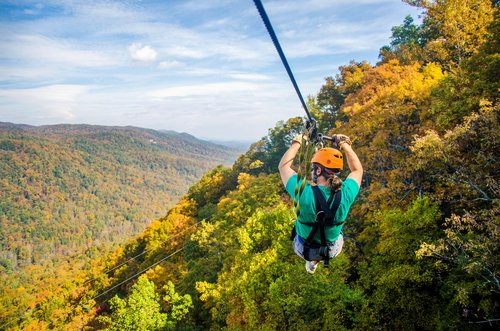
Zip Line Projects Built for Real Organizations
CDI has designed and built zip lines for organizations across the country, from universities and camps to destination adventure attractions.
The Gorge Zipline, Saluda, North Carolina
CDI performed layout and design work for The Gorge, built platforms, installed zip lines and a bridge, and provided initial training and commissioning support for the canopy tour.
LSU UREC Challenge Course, Baton Rouge, Louisiana
For Louisiana State University, CDI designed and built a challenge course that includes high and low challenge elements along with a 450-foot zip line supporting campus recreation and experiential programming.
Explore More CDI Zip Line Projects
See additional commercial zip lines, canopy tours, challenge courses, and aerial adventure projects designed and built by CDI.
[VIEW ZIP LINE PROJECT PORTFOLIO]
Planning a Commercial Zip Line
The sections below can help you understand the decisions involved before you request a proposal, issue an RFP, or begin detailed design.
What Determines Whether a Property Is Good for a Zip Line?
A large property does not automatically make a good zip line site.
And a smaller property is not automatically a bad one.
What matters is how the terrain, elevations, anchor locations, access, and desired experience work together.
During early planning, we may consider:
- Changes in elevation
- Potential launch and landing locations
- Existing trees
- Space for poles or towers
- Line length
- Desired participant experience
- Equipment and construction access
- Environmental limitations
- Guest circulation
- Staff access
- Emergency and rescue access
- Local permitting requirements
- Existing buildings, trails, or attractions
Topographic information and satellite imagery can often help us begin evaluating a property before detailed site work starts.
For some projects, the land itself can significantly reduce construction requirements.
A valley or gully, for example, may allow riders to experience substantial height above the ground while launching and landing from relatively low platforms.
Smart use of terrain can change both the experience and the project budget.
What Affects Commercial Zip Line Construction Cost?
The cable is only one small part of a commercial zip line project.
Several factors can have a much larger impact on your final price.
| Cost Driver | Why It Affects Your Budget |
| --- | --- |
| Height and span | Longer lines and taller structures increase materials, engineering and installation complexity |
| Trees, poles or towers | Support structures affect foundations, engineering and construction |
| Terrain and access | Difficult sites can increase labor and equipment needs |
| Number of lines | More lines mean more platforms, cables, braking systems and hardware |
| Braking | Different braking approaches affect design, equipment and staffing |
| Engineering | Requirements depend on loads, structures and local jurisdiction |
| Operational gear | Participant volume affects helmets, harnesses, trolleys and rescue equipment |
Participant Throughput
If you expect a significant number of participants, throughput matters.
A beautiful design that creates bottlenecks at every platform can become frustrating to operate.
The size of platforms, line transitions, braking method, staffing positions, equipment systems, and guest flow can all affect capacity.
Tell us how many people you expect to serve.
It can change the design.
Staff Requirements
More complexity can mean more staffing.
During planning, consider how employees will:
- Connect and disconnect participants
- Monitor launches and landings
- Communicate between stations
- Conduct daily inspections
- Move around the course
- Perform rescues
- Manage equipment
- Handle groups waiting to participate
Good design should support your staff instead of creating unnecessary operational problems.
Rescue and Emergency Planning
Commercial zip line operators need procedures for foreseeable situations.
Design choices can affect how easily staff reach participants and perform rescues.
That is another reason CDI looks beyond the physical construction of the course.
Commercial Zip Line Standards and Inspections
Commercial zip lines are specialized structures and should be designed, constructed, inspected, and operated accordingly.
CDI is an ACCT International accredited company, and our team works with applicable ANSI/ACCT standards throughout the life of a project.
But compliance does not end when construction finishes.
Your ongoing responsibilities may include different types of inspections, documentation, equipment checks, maintenance, and staff training.
Commissioning and Acceptance Inspections
Before a new course enters operation, a commissioning or acceptance inspection can verify that the completed installation conforms to the engineering plans, project specifications, and applicable standards.
Depending on the circumstances, this may need to be performed by a qualified independent third party.
CDI provides commissioning and third-party inspection services in addition to our design and construction work.
Annual Professional Inspections
Commercial zip lines typically require regular professional inspection.
The inspector evaluates the physical course, including items such as cables, structures, platforms, hardware, safety systems, and surrounding conditions.
Operational equipment should also be inspected according to applicable requirements and manufacturer instructions.
Routine Operator Inspections
Your staff also plays an important role between professional inspections.
Courses need routine checks based on their operating procedures, equipment requirements, site conditions, and applicable standards.
Staff training should prepare employees to recognize conditions that require attention rather than simply completing a checklist.
What Happens After Your Zip Line Opens?
Construction is only one phase of owning a commercial zip line.
The course will live outside through rain, heat, cold, wind, vegetation growth, storms, and thousands of participant cycles.
Components wear.
Wood ages.
Equipment reaches retirement criteria.
Trees change.
Hardware needs attention.
Storms happen.
Planning for that reality from the beginning gives you a much better picture of the true cost of ownership.
CDI can continue supporting your operation with:
- Professional inspections
- Third-party inspections
- Maintenance
- Repairs
- Course modifications
- Expansion
- Staff training
- Practitioner certification
- Operational equipment
- Replacement equipment
- Operational reviews
We also inspect, maintain, and upgrade courses originally built by other companies.
Who Does CDI Build Zip Lines For?
Commercial zip lines can serve very different purposes depending on the organization.
| Organization | Typical Priorities |
| --- | --- |
| Camps & Retreat Centers | Programming, staffing, group sizes, age ranges and budget |
| Colleges & Universities | Campus recreation, experiential programs and challenge-course integration |
| Public Parks | Procurement, public use, engineering, accessibility and stakeholder requirements |
| Commercial Attractions | Throughput, staffing, guest experience, maintenance and revenue |
| Resorts & Campgrounds | Guest amenities, property integration and manageable operations |
Every site is different, but most projects follow a similar path.
1. Tell Us What You're Considering
Share your location, property information, goals, approximate budget, expected users, and anything else you already know.
You do not need finished plans.
2. Initial Site and Feasibility Review
We begin considering the property, terrain, potential routes, structures, access, and budget.
This helps determine whether the idea is practical and what type of project may make sense.
3. Concept and Design Development
Once the direction is established, the project progresses into detailed layout and design.
This may include structures, platforms, cable routes, braking systems, transitions, engineering, and other project-specific details.
4. Construction
Our crews build and install the system according to the approved project design.
5. Inspection and Opening Preparation
The completed system goes through the appropriate commissioning and inspection process.
Operational procedures, equipment, and staff readiness also need to be addressed before opening.
6. Staff Training
CDI can train your employees to operate the system and perform their responsibilities appropriately.
7. Long-Term Support
After opening, we can continue assisting with inspections, maintenance, repairs, training, equipment, modifications, and future expansion.
Commercial Zip Line FAQ
How much does it cost to build a commercial zip line?
A simple commercial zip line may start around $10,000 to $15,000, while large multi-line canopy tours can cost $500,000 or more. The biggest variables include line length, height, terrain, towers or other structures, number of lines, engineering, braking systems, construction access, and operational equipment.
Can CDI help us determine what we can build for our budget?
Yes. In many cases, starting with a realistic budget is more useful than starting with a finished design. CDI can review your goals and property and help identify a project scope that makes sense for the available funding.
Does CDI build single zip lines?
Yes. CDI builds everything from relatively simple single commercial zip lines to large multi-line canopy tours and zip line systems incorporated into challenge courses and aerial adventure parks.
Does a commercial zip line need towers?
Not necessarily. Zip lines can use trees, poles, towers, natural terrain, or a combination of structural systems. The right solution depends on the property, desired experience, engineering requirements, operations, and budget.
Can you tell from satellite maps whether our property might work?
Satellite imagery, topographic information, photographs, surveys, and other property information can help with an early feasibility review. More detailed site evaluation may be necessary as the project progresses.
How much land do you need for a commercial zip line?
There is no single minimum acreage. What matters more is the usable configuration of the property, including elevation changes, line corridors, launch and landing locations, structures, participant circulation, and construction access.
How long should a commercial zip line be?
There is no ideal length for every project. A good line is designed around the terrain, desired participant experience, speed, braking system, structures, and operational goals. Longer does not automatically mean better.
Can CDI build a zip line as part of an existing challenge course?
Yes. Zip lines can be added to new or existing challenge courses and aerial adventure parks when the site and existing infrastructure support the project.
Can CDI add zip lines to a course built by another company?
Potentially. We work on courses built by other providers as well as our own. The existing course and proposed modification would need to be evaluated before determining the appropriate approach.
Does CDI provide engineering?
Engineering requirements vary by project and jurisdiction. CDI coordinates the design and engineering needs associated with its projects so structural requirements can be addressed as part of the overall system.
What standards apply to commercial zip lines?
Commercial zip lines may be subject to applicable ANSI/ACCT standards as well as state regulations, local codes, engineering requirements, permitting requirements, insurance requirements, and manufacturer instructions. The requirements depend on the project and its location.
Does a new zip line need an inspection before opening?
New installations typically go through a commissioning or acceptance inspection process to verify that the completed project conforms to applicable plans, specifications, and standards. Specific requirements can vary by jurisdiction and project.
How often does a commercial zip line need to be inspected?
Commercial zip lines require routine operator inspections as well as periodic professional inspection. The exact requirements depend on applicable standards, local regulations, manufacturers, insurers, and the system itself.
Does CDI provide annual zip line inspections?
Yes. CDI provides professional inspections for zip lines, challenge courses, and aerial adventure parks, including courses built by other companies.
Does CDI provide third-party inspections?
Yes. CDI provides qualified third-party inspections when an independent inspector is needed for regulatory, contractual, insurance, or other reasons.
Will you train our staff after construction?
Yes. CDI provides staff training for commercial zip lines, challenge courses, and aerial adventure operations. Training can address the specific systems and procedures your employees will use.
Can CDI provide the equipment we need to operate the zip line?
Yes. CDI can help supply operational equipment for staff and participants, including helmets, harnesses, trolleys, connectors, tethers, rescue equipment, and other PPE and operational gear.
What maintenance does a commercial zip line require?
Maintenance varies by design and environment. Common needs can include hardware adjustments, cable-related work, wood repairs or treatment, platform maintenance, vegetation management, replacement of worn components, equipment replacement, and repairs following storms or other events.
Can CDI repair or renovate an older zip line?
Yes. CDI provides maintenance, repairs, modifications, and upgrades for existing commercial zip lines, including systems originally constructed by other companies.
Does CDI respond to RFPs and RFQs?
Yes. CDI works with municipalities, universities, public agencies, and other organizations using formal procurement processes. You can invite CDI to respond to an RFP or RFQ for a commercial zip line, canopy tour, challenge course, or related project.
Wondering what it might cost to install a zipline? See our Price Estimator
Ready to take the next step?
Contact us today to explore how we can help you create a world-class challenge course that meets your needs and inspires your participants.
Is your property a good fit?Use our Site Feasibility Checklist to find out