Challenge Course, Zip Line & Aerial Adventure Park Construction
Experienced Challenge Course Builders Since 1980
Ready to build a challenge course, ropes course, zip line, or aerial adventure park? You need a construction company that knows how to turn plans into a facility that works for your property, participants, staff, and budget.
Challenge Design Innovations (CDI) has been building custom adventure facilities across the United States for more than 45 years. Our construction teams install everything from low ropes courses at summer camps to multi-level aerial adventure parks, commercial zip line tours, and specialized military obstacle courses.
We handle more than construction. CDI can also help with site planning, design, engineering coordination, equipment installation, staff training, commissioning support, and long-term maintenance.
As an ACCT International Accredited Professional Vendor, we bring decades of specialized industry experience to each project.
Whether you're building something new, expanding an existing course, or replacing aging structures, CDI can help you get it built.
Primary CTA: [Request a Construction Quote]
What Types of Adventure Facilities Does CDI Build?
From small training courses to large commercial attractions, CDI has experience constructing facilities for different properties, budgets, and operating needs.
Aerial Adventure Park Construction
Multi-level aerial courses, suspended obstacles, platforms, bridges, and integrated zip lines. Built for resorts, commercial attractions, campgrounds, and public recreation facilities.
High & Low Ropes Course Construction
Pole-based and tree-based challenge courses, team elements, climbing activities, and belay systems for schools, colleges, camps, and retreat centers.
Zip Line & Canopy Tour Construction
Single zip lines, multi-line canopy tours, support structures, platforms, cable systems, and braking systems built for recreation and commercial operations.
ROTC, Tactical & Obstacle Course Construction
Custom military training obstacles, JROTC and ROTC courses, fitness challenges, and team-building structures built around specific training requirements.
Climbing Walls & Bouldering Structures
Outdoor climbing walls, climbing towers, and custom bouldering structures for recreation, education, fitness, and public facilities.
Smaller aerial courses, children's zip lines, platforms, and age-appropriate adventure elements for family attractions, camps, and recreation destinations.
Why Choose CDI as Your Challenge Course Builder?
Hiring a contractor for an adventure facility is different from hiring a general construction company.
Challenge courses and zip lines involve specialized structures, cables, connections, life-safety systems, inspection requirements, and operating procedures. Decisions made during construction affect how the facility performs for years.
CDI brings several advantages to your project:
- 45+ years of experience: Our history began in 1980, giving us decades of knowledge from building and supporting adventure facilities nationwide.
- Specialized construction crews: Our team understands the equipment, materials, installation methods, and unusual working conditions involved in adventure course construction.
- ACCT International accreditation: CDI is an Accredited Professional Vendor with experience working under applicable ANSI/ACCT standards.
- Full project support: We offer design, construction, equipment, staff training, professional inspections, and maintenance.
- Long-term service: We continue supporting clients after construction and also work on facilities originally built by other companies.
We don't just know how to build challenge courses. We know what it takes to inspect, maintain, and operate them after they're built.
That experience helps us identify potential problems before they become expensive changes or long-term maintenance issues.
Have a Site, Budget, or Construction Deadline? Let's Talk.
You don't need a complete set of construction drawings to contact CDI.
We regularly work with organizations at different stages of project planning, including clients who are:
- Requesting construction pricing for an approved project.
- Developing a budget for a new facility.
- Comparing challenge course construction companies.
- Working with architects, engineers, or purchasing departments.
- Expanding or replacing an existing course.
- Planning a project around a seasonal opening deadline.
- Preparing an RFP or RFQ for competitive bids.
We can help evaluate what needs to happen before construction begins, which services your project requires, and what information is needed to develop a reliable proposal.
CTA: [Discuss Your Construction Project]
Tell us what you're planning, where you're building, and your expected timeline. We'll help you determine the next step.
Our Challenge Course Construction Process
A successful project starts well before the first post is installed or cable is tensioned.
CDI works with clients to define the scope, identify site requirements, coordinate construction, and prepare the facility for operation.
1. Project Review and Construction Planning
We begin by reviewing your project goals, site information, design requirements, budget, and desired completion date.
If you already have plans, we can discuss whether they contain the information needed for construction. If you're still in the planning stage, CDI can provide design and engineering coordination services.
We also review site access, available utilities, equipment needs, and other conditions that may affect construction.
2. Site Preparation and Mobilization
Every project site presents different challenges.
Some facilities are accessible by trucks and construction equipment. Others require crews to transport materials by hand, work on steep slopes, or build in sensitive natural environments.
CDI considers these challenges when planning construction methods, equipment, crew access, and material delivery.
We coordinate responsibilities for site preparation, clearing, foundations, and other preliminary work as defined in the construction agreement.
3. Structural Construction and Installation
Our crews construct the structures and activity elements that make up your course.
Depending on the project, this may include:
- Engineered towers, poles, and support structures.
- Tree-mounted platforms and attachments.
- Structural anchors and foundations.
- Elevated bridges and challenge elements.
- Zip line cables and terminations.
- Low ropes elements and ground-level activities.
- Climbing structures and obstacle course features.
- Belay, fall-protection, and braking systems.
We follow the approved design documents, applicable standards, and project-specific engineering requirements.
4. Equipment, System Checks, and Commissioning
Once construction is complete, the facility must be prepared and evaluated before participants use it.
Depending on the project, CDI can coordinate system checks, operational equipment, required documentation, and commissioning or acceptance inspections.
Our experience providing professional inspections helps us understand what needs to be considered during the construction process.
5. Staff Training and Operational Handoff
A completed course is only part of a successful opening.
Your staff also need to understand the systems they will operate, including participant equipment, belay procedures, supervision, rescue, and daily inspections.
CDI provides site-specific training and can help equip your team with the operational gear needed for your facility.
We also offer ongoing professional inspections, maintenance, repairs, and equipment support.
Construction Methods for Different Sites and Course Types
The right construction method depends on your property, intended activities, environmental conditions, and long-term maintenance needs.
CDI can help evaluate which approach makes sense for your property and operating goals.
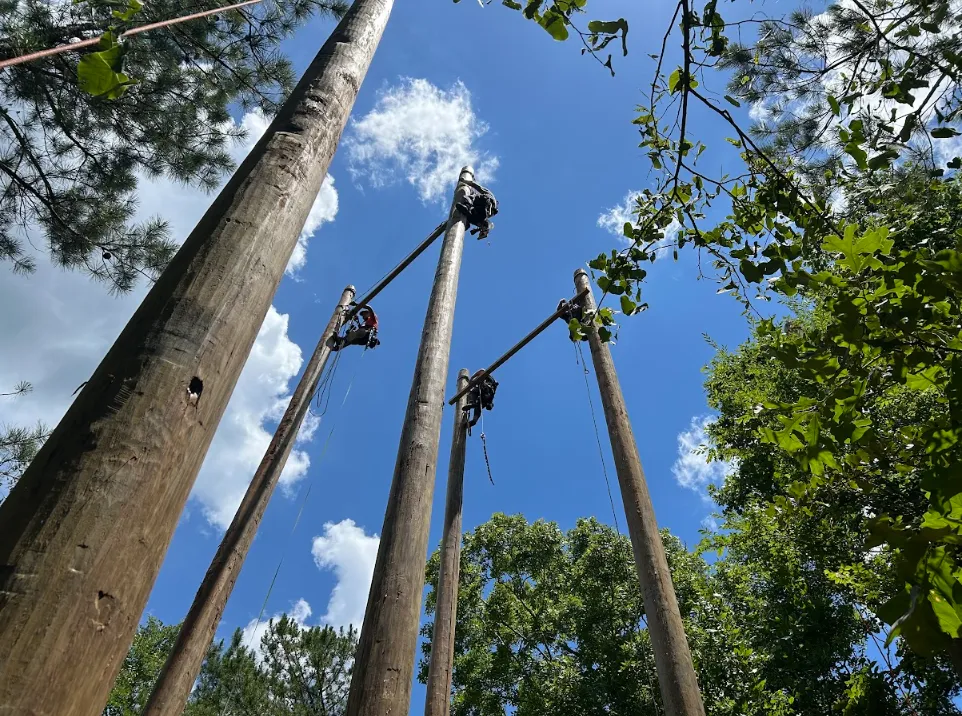
For example, a wooded summer camp may benefit from a pole-supported high ropes course that allows staff to manage activities from defined locations. A commercial canopy tour may use selected trees and elevated platforms to take advantage of natural terrain.
There is no single best construction method for every facility.
How Much Does It Cost to Build a Challenge Course or Zip Line?
Construction costs vary widely depending on the facility being built.
A small challenge course with several low elements requires a different budget than a large aerial adventure park with multiple levels, towers, zip lines, and advanced belay systems.
Major construction cost factors include:
- Size and complexity: Number of elements, platforms, zip lines, and structures.
- Height and span: Taller structures and longer cable spans can increase engineering, material, and installation requirements.
- Site conditions: Steep terrain, difficult access, clearing, and environmental constraints affect labor and equipment costs.
- Support structures: Trees, utility poles, and engineered towers have different installation requirements.
- Safety and operating systems: Belay systems, braking systems, staff access, and rescue provisions.
- Engineering and permitting: Structural requirements, professional engineering, and jurisdictional approvals.
- Equipment and training: Harnesses, helmets, operating equipment, staff instruction, and startup needs.
When comparing construction proposals, make sure you're comparing the same scope.
One proposal may include engineering, equipment, training, and commissioning services, while another may exclude some of those items.
CDI can help you understand the major cost drivers and establish a practical project budget before construction begins.
CTA: [Request a Construction Estimate]
New Construction, Expansions, and Course Replacement
Not every construction project starts with an empty property.
CDI also works with organizations that already have ropes courses, adventure parks, or zip lines and need to improve or expand them.
Our construction and service teams can assist with:
- Adding new challenge elements, platforms, or zip lines.
- Expanding the capacity of an existing aerial course.
- Replacing aging structures or course components.
- Renovating existing facilities.
- Updating belay systems and operational features.
- Repairing damage and replacing worn or deteriorated materials.
- Removing or replacing facilities that no longer meet program needs.
We also work with courses built by other companies.
If you're unsure whether your existing course should be repaired, renovated, or replaced, CDI can help evaluate your options.
Construction Is Just One Part of What CDI Does
Your organization may need more than a contractor to install a course.
CDI can remain involved throughout the life of your facility, providing professional inspections, repairs, staff training, operational reviews, and equipment.
Our experience across these services gives clients one knowledgeable point of contact for many of the ongoing needs associated with adventure course ownership.
And if your project isn't ready for construction, our separate Course Design Services can help with conceptual plans, site feasibility, budgeting, and engineering coordination.
Frequently Asked Questions About Challenge Course Construction
How do I choose a qualified challenge course builder?
Look for a company with direct experience constructing the type of course you need. Ask about industry accreditation, completed projects, construction methods, safety systems, engineering coordination, commissioning requirements, and post-construction support. An experienced builder should also help you understand what is included and excluded from a construction proposal.
Does CDI build challenge courses nationwide?
Yes. CDI provides challenge course, zip line, and aerial adventure park construction services across the United States. Project scheduling, travel, mobilization, and site access are considered during planning and pricing.
Can CDI build a course from plans provided by another designer?
CDI can review plans prepared by another designer and discuss whether the project is suitable for construction by our team. The plans must contain the necessary technical information and meet applicable engineering, safety, and regulatory requirements. Additional design review or engineering work may be necessary.
How long does it take to construct a challenge course?
Construction timelines depend on project size, complexity, site access, material availability, weather, and engineering or permitting requirements. Smaller installations may require substantially less field time than large commercial aerial adventure parks. CDI can provide a project-specific schedule after evaluating the scope.
Does a challenge course require a building permit?
Permitting requirements depend on your location, course type, structures, and applicable laws and regulations. Some projects may require building permits, zoning approvals, engineering documentation, or other reviews. CDI can assist with planning and coordination, but requirements must be confirmed with the appropriate authorities.
Can CDI build a zip line on steep or difficult terrain?
Yes. CDI has experience constructing zip lines and adventure facilities on challenging sites. Steep slopes, wooded areas, limited equipment access, and elevation changes can affect construction methods and costs. A site review helps determine feasibility and the appropriate approach.
Is it better to build a ropes course using trees or poles?
Both approaches can work well. Trees may provide a natural setting but require careful assessment and ongoing monitoring. Pole-supported courses provide more control over layout and structural placement, although they require suitable installation conditions. The right choice depends on your site, design, maintenance expectations, and project goals.
Does CDI provide equipment and training after construction?
Yes. CDI supplies operational equipment and offers staff training, including site-specific instruction. Equipment and training requirements should be established during project planning so the scope and cost are clear.
Does CDI perform inspections on newly constructed courses?
CDI provides commissioning and acceptance inspection services. The inspection arrangement should be determined in accordance with applicable requirements, including any necessary independence from the construction provider. CDI can help identify these requirements during project planning.
Can you add new elements to an existing ropes course?
Yes. CDI can evaluate an existing facility and discuss potential additions, upgrades, or renovations. Structural compatibility, current condition, course capacity, operating systems, and applicable standards all need to be considered.
Can CDI help with municipal or university bidding requirements?
Yes. CDI works with colleges, universities, municipalities, and other organizations that use formal purchasing procedures. We can assist with technical project information, scope development, budgeting, and RFP or RFQ coordination.
What information does CDI need to provide a construction quote?
It helps to share the project location, intended course type, site information, approximate budget, desired opening date, and any existing plans. You can still contact CDI before you have all these details. We can help determine which information is needed to move toward an estimate or formal proposal.
Wondering what it might cost? See ourPrice Estimator
Ready to take the next step?
Contactus today to explore how we can help you create a world-class challenge course that meets your needs and inspires your participants.
Is your property a good fit?Use our Site Feasibility Checklist to find out