ROTC Obstacle Course Design & Construction
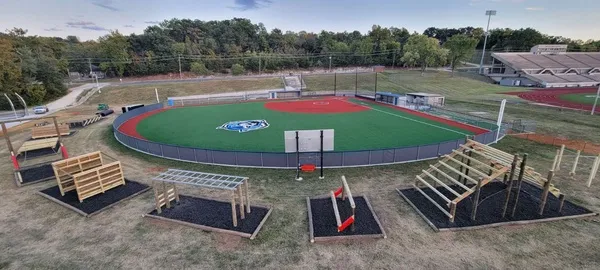
Custom Training Courses Built for ROTC and JROTC Programs
Challenge Design Innovations designs and builds custom ROTC and JROTC obstacle courses, Raider training courses, leadership reaction courses, confidence courses, obstacle courses, climbing and rappel towers, fitness courses, and other military-style training structures.
Whether you are starting with an open field, replacing an aging course, or adding new obstacles to an existing facility, we can help you build a course around your program, your cadets, your property, and your budget.
And because no two programs train exactly the same way, we do not start with a one-size-fits-all package.
We start with what you need your cadets to do.
Build the Right Course for Your ROTC or JROTC Program
An ROTC training course can serve several purposes.
Some programs need a course focused on physical readiness and conditioning. Others are preparing cadets for Raider competitions. Some want more opportunities to develop leadership, communication, teamwork, problem-solving, confidence, or technical skills.
Your course may include:
- ROTC and JROTC obstacle courses
- JROTC Raider training courses
- Leadership Reaction Courses
- Confidence Courses
- O-Courses and assault-style courses
- Fitness and conditioning courses
- Air Assault Towers
- Rappel Towers
- MCAT and climbing towers
- Cargo nets and climbing structures
- Rope bridges and crossings
- Walls, crawls, balance obstacles, and agility elements
- Team problem-solving obstacles
- Custom military-style training elements
- Fall-protection systems where appropriate
- Hybrid facilities combining several types of training
Not sure exactly what you need?
That's normal.
You don't need to have every obstacle selected before you contact us. Tell us what your program is trying to accomplish, how many cadets you serve, what space you have available, and what budget you are working with.
We can help you turn that information into a practical course.
JROTC Raider Training Courses
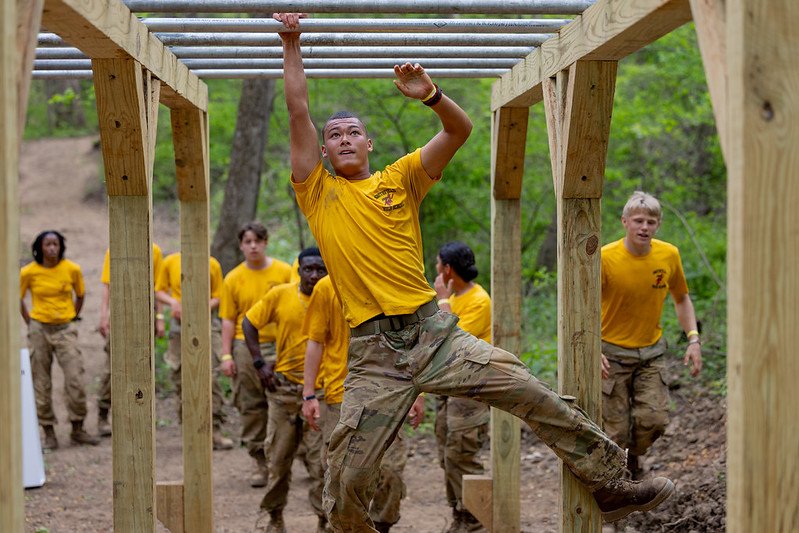
For JROTC programs, a course can be designed specifically to support Raider training.
That may include obstacles and training areas that help cadets work on strength, endurance, agility, communication, teamwork, leadership, rope skills, and other activities used during Raider preparation.
We can also help you think through something that is easy to overlook: how the obstacles work together as a course.
The individual obstacles matter. But so do their order, spacing, access, training flow, instructor visibility, group size, drainage, fall areas, and the way cadets move from one activity to another.
A good Raider training course should make sense as a complete training facility, not just a collection of obstacles placed around a field.
Leadership, Confidence, and Team Training
Not every ROTC course needs to be competition-focused.
CDI also designs facilities built around leadership development and team problem-solving.
Leadership Reaction Courses and other team-based obstacles can require cadets to communicate, make decisions, manage limited resources, solve problems, and lead one another through challenges.
These structures can be incorporated into a larger obstacle course or developed as a dedicated leadership training area.
Choosing Obstacles for Your Course
One of the first questions we hear is:
What obstacles should we build?
There is no universal answer.
The right mix depends on your training objectives, cadet population, available space, instructor needs, budget, and how you expect the course to be used.
A course might include challenges involving:
- Climbing
- Crawling
- Balance
- Upper-body strength
- Agility
- Endurance
- Rope skills
- Team movement
- Problem-solving
- Leadership
- Communication
- Rappelling
- Confidence at height
We can help you select individual obstacles and then determine how those obstacles should fit together.
Traditional Designs, Modern Construction
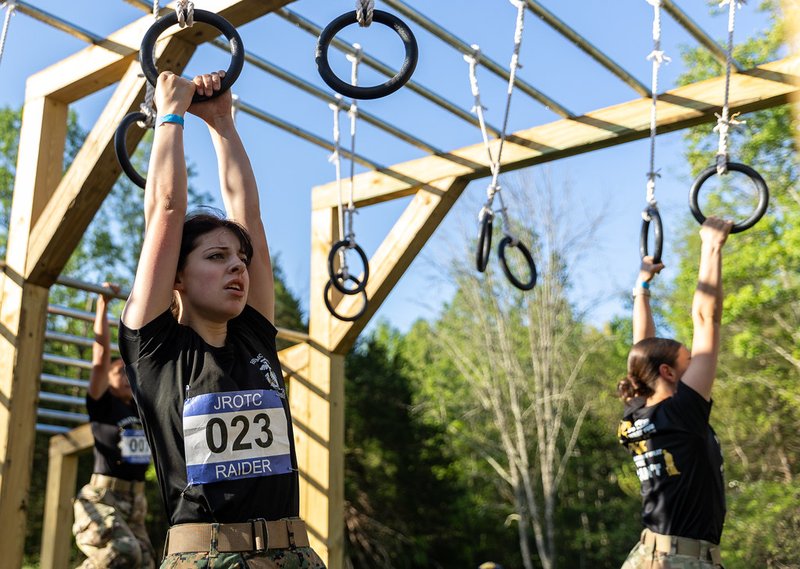
Many military obstacle and confidence-course designs have been used for decades.
There can be real value in keeping the purpose and feel of those traditional obstacles.
But an older drawing does not always account for the way a facility will be built, maintained, inspected, and operated today.
CDI can incorporate traditional military-style elements while also considering modern materials, structural engineering, fall protection, access, maintenance, drainage, inspection needs, and the long-term life of the facility.
From Site Evaluation to Completed Course
CDI can manage the project from the first conversation through construction, staff training, and long-term support.
Site Evaluation and Planning
Before deciding what to build, we look at the site.
Important considerations may include:
- Available acreage
- Terrain and slope
- Soil conditions
- Drainage
- Existing trees or structures
- Underground and overhead utilities
- Vehicle and construction access
- Instructor visibility
- Emergency access
- Required fall areas
- Space for future expansion
A good site can sometimes allow you to accomplish more with the same budget.
And identifying problems early is usually much less expensive than discovering them during construction.
Custom Design and Engineering
Once we understand your training goals and site, we can develop a course around them.
Depending on the project, CDI can provide course layouts, construction details, structural design, engineering coordination, and professionally stamped drawings.
If you already have specifications or required obstacle designs, we can review those as part of the process.
If you are starting with only an idea and a budget, we can help you develop the scope.
Construction and Installation
Our crews build obstacle courses and training structures across the country.
We plan each installation around the site, project requirements, materials, construction access, schedule, and the long-term use of the course.
Our goal is not simply to complete the build.
We want to leave you with a training facility that makes sense for the instructors and cadets who will actually use it.
Repair, Upgrade, or Replace an Existing ROTC Course
You may not need an entirely new course.
CDI can also inspect and evaluate existing ROTC, JROTC, military, tactical, and obstacle-course structures.
Older courses can develop problems from weather exposure, heavy use, wood deterioration, worn ropes or nets, corrosion, drainage problems, loose hardware, damaged surfacing, or changes to the surrounding property.
Depending on the condition of the course, your best option may be to:
- Repair individual components
- Replace worn obstacles
- Rebuild specific structures
- Add new obstacles
- Improve fall areas
- Update access or fall-protection systems
- Change the course layout
- Expand the facility
- Replace the entire course
We can help you determine which approach makes sense instead of assuming everything needs to be replaced.
Inspections and Ongoing Maintenance
Construction is only the beginning of the life of an obstacle course.
CDI also provides professional inspections, maintenance, repairs, equipment support, and upgrades.
That means you can continue working with the same company after the original construction project is complete.
And we can inspect and repair courses built by other companies as well.
If you inherited an older ROTC or JROTC course and are not sure who built it, what condition it is in, or what should happen next, that is a good place to start.
Planning, Budgeting, and Comparing Builders
An obstacle course can range from a small collection of training elements to a large, multi-phase training facility.
The cost depends on more than the number of obstacles.
It can also be affected by:
- Type and size of structures
- Height
- Materials
- Site conditions
- Engineering requirements
- Fall protection
- Impact areas
- Site preparation
- Equipment
- Mobilization
- Construction access
- Number of training stations
- Towers or specialty structures
- Inspection requirements
- Project location
If you already know your available budget, tell us.
That can be extremely helpful.
We can look at your site and goals and help determine what type of course may realistically fit within that budget.
Planning a Course in Phases
You also do not necessarily have to build everything at once.
If your long-term goal is larger than your current budget, we can discuss a phased approach.
For example, you might construct your highest-priority obstacles first, then add additional elements, towers, leadership challenges, or specialized training structures later.
Planning for those future phases during the original design can make expansion much easier.
Funding and Procurement
ROTC and JROTC projects may involve school purchasing departments, universities, districts, government contracting offices, grants, capital budgets, or other funding sources.
We can help by providing clear scopes, budget information, drawings, project descriptions, and proposal information that your organization may need during the approval process.
CDI can also respond to formal RFPs and RFQs.
CAGE/NCAGE: 6FV38
Unique Entity ID: KN8ZW789J9W4
Comparing ROTC Obstacle Course Builders
If you are getting proposals from two or three companies, do not compare only the final price.
Make sure you are comparing the same scope.
Ask:
- What obstacles are included?
- Are the designs custom or standardized?
- Is site preparation included?
- Are engineered drawings included?
- Are professional engineering stamps included where required?
- Who is responsible for drainage and fall areas?
- Is fall protection included where needed?
- Are equipment and training included?
- Is an acceptance or commissioning inspection included?
- What documentation will you receive?
- What is excluded from the quote?
- Who can inspect and maintain the course later?
- Can the company repair or expand the course in the future?
- Does the company have experience with similar ROTC, JROTC, military, or tactical facilities?
Two proposals that look similar on the first page can represent very different finished projects.
Get clarity about what you are actually buying.
Why ROTC and JROTC Programs Work With CDI
Challenge Design Innovations has been designing and building challenge-based training environments for more than 45 years.
But experience alone is not enough.
What matters is how that experience helps you make better decisions about your project.
With CDI, you can work with one team for:
- Site evaluation
- Course planning
- Custom design
- Engineering coordination
- Construction
- Equipment
- Training
- Inspections
- Repairs
- Renovations
- Expansion
- Long-term support
We work throughout the United States including Alaska and Hawaii, and can support projects ranging from a few individual obstacles to larger ROTC, JROTC, military bases, and tactical training facilities.
And our relationship does not have to end when construction is finished.
If your course needs an inspection, repair, new obstacle, updated equipment, or expansion years later, you can call us again.
Start Planning Your ROTC or JROTC Course
You do not need a finished design before you contact us.
A property location, rough idea of what you want, expected users, and approximate budget are enough to start the conversation.
We can help you determine what makes sense from there.
Already have an existing course?
Send us information about the course and what you want to repair, replace, or add.
Planning a new course?
Use our Site Feasibility Checklist to evaluate your property before the first site visit.
Trying to establish a budget?
Use our Project Price Estimator for preliminary planning.
Preparing an RFP or RFQ?
Contact CDI for help developing a scope that allows you to compare proposals more accurately.
Frequently Asked Questions
What is the difference between an ROTC obstacle course and a JROTC Raider course?
An ROTC obstacle course can be designed around physical conditioning, confidence, leadership, teamwork, technical training, or a combination of objectives. A JROTC Raider training course is typically more specifically focused on preparing cadets for Raider activities and competition-related skills. The final design should reflect how your individual program plans to use the facility.
Can CDI build individual obstacles instead of an entire course?
Yes. A project can include a complete new course, several obstacles, one specialized structure, or additions to an existing training facility.
Can you replace an old ROTC obstacle course?
Yes. CDI can evaluate existing structures and help determine whether repair, partial replacement, expansion, or complete replacement makes the most sense.
Can we build the course in phases?
Yes. If the site and overall design are planned with future growth in mind, obstacles and training structures can often be added as funding becomes available.
Can you build a Raider training course for a high school JROTC program?
Yes. CDI can design a course around your JROTC program's training goals, available space, anticipated group sizes, budget, and the types of Raider activities you want cadets to practice.
Do you build rappel and climbing towers?
Yes. CDI designs and builds rappel towers, climbing structures, Air Assault-style training towers, and other custom elevated training structures.
Do you inspect ROTC and obstacle courses built by other companies?
Yes. CDI provides professional inspection, maintenance, and repair services for existing courses, including facilities built by other companies.
How much does an ROTC or JROTC obstacle course cost?
Costs vary significantly based on the number and type of obstacles, towers, materials, site conditions, engineering, access, fall protection, site preparation, location, and overall project scope. Starting with a realistic budget can help CDI recommend a course that fits your program instead of designing something that does not fit your available funding.
What information should we send CDI to get started?
A property address or site location, photos, approximate available space, your training goals, the number and age of participants, obstacles or structures you are considering, approximate budget, and desired timeline are all helpful. You do not need to have every answer before contacting us.
Ready to Talk About Your Project?
Wondering what it might cost? See our Price Estimator
Ready to take the next step?
Contact us today to explore how we can help you create a world-class challenge course that meets your needs and inspires your participants.
Is your property a good fit?Use our Site Feasibility Checklist to find out