Challenge Course, Zip Line & Aerial Adventure Park Design Services
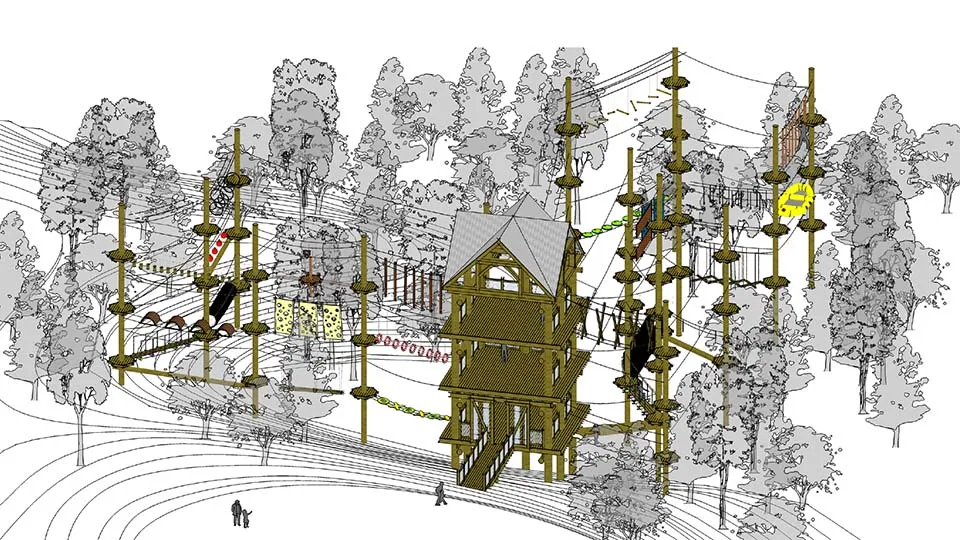
Custom Course Design From Concept and Feasibility to Construction-Ready Plans
Planning a new challenge course, ropes course, zip line, or aerial adventure park? Start with a design that fits your property, your goals, your operating needs, and your budget.
Challenge Design Innovations (CDI) has designed and built adventure facilities across the United States since 1980. From small camp challenge courses to large commercial aerial adventure parks, we help organizations turn early ideas into practical, buildable projects.
Our team provides site assessments, feasibility planning, conceptual layouts, custom course design, and engineering coordination. And because CDI also constructs, inspects, maintains, and equips these facilities, we understand how design decisions affect your project long after construction is complete.
Whether you have a detailed plan or just a piece of property and an idea, we can help you determine what makes sense.
Primary CTA: [Discuss Your Project]
What Types of Adventure Courses Does CDI Design?
Every organization has different goals, different participants, and different property constraints. We design courses around those needs rather than forcing your project into a standard layout.
Multi-level adventure courses designed for commercial attractions, public parks, resorts, campgrounds, and recreation destinations. We consider guest capacity, staffing, course difficulty, and operational flow.
Custom team-building and ropes courses for camps, schools, universities, retreat centers, and outdoor education programs. Designs support facilitated activities, leadership development, and group challenges.
Zip Lines & Canopy Tours
Single zip lines, multi-line tours, and integrated adventure attractions designed around available terrain, elevation, braking systems, rider experience, and daily operations.
ROTC, Military & Obstacle Courses
Custom training and fitness courses for JROTC, ROTC, military, public safety, and school programs. Elements can support physical conditioning, teamwork, and specific training objectives.
Climbing Walls & Bouldering Structures
Outdoor climbing walls, climbing towers, and custom bouldering structures designed for recreation, training, and educational programs.
Age-appropriate adventure courses and kid-sized zip lines designed for younger participants, with attention to supervision, progression, and accessibility.
Why Organizations Choose CDI for Course Design
A course may look great on paper and still be expensive to operate, difficult to maintain, or poorly suited to its participants.
That's why experience matters before construction begins.
CDI has spent more than 45 years working with challenge courses, zip lines, climbing structures, and aerial adventure facilities. Our designers work with people who build, inspect, train on, and maintain these systems.
That experience helps us address questions that are easy to miss during early planning:
- Can the course fit the intended property and budget?
- Will it accommodate the expected number of participants?
- How many staff members will it take to operate?
- Will it be practical to inspect, maintain, and repair?
- Can it be expanded or modified in the future?
- What engineering, permitting, and site conditions need attention?
You aren't just hiring someone to draw a course. You're working with a team that understands what it takes to operate one.
CDI is an ACCT International Accredited Professional Vendor, with experience supporting projects for universities, municipalities, summer camps, military programs, and commercial recreation businesses.
Not Sure What You Can Build or What It Will Cost?
You don't need final plans to start a conversation with CDI.
Many clients contact us before they have selected a location, established a final budget, or decided exactly what type of course they need.
We can help you evaluate the possibilities, identify potential obstacles, and develop a realistic direction before you commit to a larger investment.
Our early planning services may include:
- Reviewing your property, goals, and available space.
- Comparing course types and potential layouts.
- Discussing preliminary construction budgets and major cost drivers.
- Identifying site access, terrain, tree, and structural considerations.
- Exploring participant capacity, staffing, and revenue goals.
- Identifying engineering, permitting, and future maintenance needs.
Whether you're developing a new commercial attraction, expanding a camp program, or preparing a proposal for leadership approval, CDI can help you make informed decisions.
CTA: [Let's Talk About Your Project]
How CDI's Custom Course Design Process Works
No two projects begin at the same point. Some clients have detailed requirements and approved funding. Others are still evaluating whether their property is suitable.
Our design process can be adapted to either situation.
1. Project Consultation and Goal Setting
We start by understanding what you want to accomplish.
Who will use the course? Is it intended for commercial recreation, education, team development, fitness training, or a combination of activities? How many people will participate? What is your target budget?
These answers help us determine the type and scale of facility that will best serve your organization.
2. Site Assessment and Feasibility
Your property plays a major role in what can be designed and built.
Depending on the project, CDI evaluates terrain, available space, trees, access, elevation changes, existing infrastructure, and environmental considerations.
We also identify potential limitations that may affect construction costs, permitting, operations, or future expansion.
3. Conceptual Course Design and Layout
Once we understand your goals and site, we begin developing the course concept.
Conceptual designs may include proposed locations, course layouts, activity types, structural approaches, participant flow, and preliminary visualizations.
This gives your organization something concrete to review, discuss, and use for early planning.
4. Budget Review and Design Refinement
A good design must fit the budget, not just the property.
We work with you to review cost drivers, compare options, and adjust the design when needed.
That may mean changing the number of elements, choosing different support structures, modifying the course footprint, or planning construction in phases.
5. Detailed Design and Engineering Coordination
When the concept is approved, CDI can develop the technical design information needed to move toward construction.
Depending on the project scope, this may include structural layouts, equipment and system specifications, construction details, and coordination with qualified engineers.
We also consider applicable ANSI/ACCT standards, other relevant requirements, and site-specific engineering needs.
The final design deliverables are established according to your project requirements and the services included in the design agreement.
What Goes Into a Well-Designed Challenge Course?
The best challenge course design does more than make an attraction exciting. It balances the participant experience with the practical needs of the organization operating it.
Participant Experience, Capacity, and Accessibility
A commercial aerial park needs a different layout than a facilitated challenge course used by school groups.
We consider the intended age ranges, abilities, program goals, difficulty levels, participant movement, and expected capacity.
For commercial attractions, design decisions can directly affect wait times, staffing requirements, and the number of guests who can participate.
For educational programs, flexibility and the ability to facilitate different activities may matter more than maximum throughput.
Safety Systems, Inspection, and Maintenance
The design must also account for how the facility will be managed throughout its life.
This includes appropriate belay and life-safety systems, staff supervision, rescue access, inspection procedures, equipment needs, and maintenance access.
These are not decisions to leave until opening day.
As a company that also performs professional inspections, training, and repairs, CDI brings those operational considerations into the design process from the beginning.
Site Conditions and Structural Support
Some facilities work best in trees. Others require utility poles, engineered towers, or a combination of support structures.
The right choice depends on the property, structural requirements, intended course design, maintenance needs, and available budget.
A small change in location or elevation can sometimes make a significant difference in project feasibility and construction complexity.
How Much Does Challenge Course Design Cost?
The cost of professional challenge course design depends on the size, complexity, and requirements of the project.
Designing a small, low challenge course for a summer camp is very different from planning a multi-level commercial aerial adventure park with engineered towers, several activity routes, and integrated zip lines.
Factors that affect design costs include:
- Project size and number of course elements.
- Site conditions and the need for assessments.
- Complexity of structural supports and safety systems.
- Required engineering and technical documentation.
- Level of design detail and visualization.
- Permitting, stakeholder review, and approval requirements.
- Whether the project involves new construction or modifying an existing facility.
CDI can also help you evaluate the potential total project budget before you invest in detailed design.
This can be particularly useful for organizations developing capital improvement plans, applying for grants, preparing RFPs, or requesting funding approval.
Contact CDI to discuss the level of planning and design your project needs.
From Course Design to Construction and Long-Term Support
CDI's role doesn't have to end when the plans are completed.
For clients who want one experienced company involved throughout the project, we also provide construction and installation, commissioning support, staff training, operational equipment, professional inspections, maintenance, and repairs.
We can also assist with expansions, upgrades, and planning for existing courses, including facilities originally built by other companies.
That means you can work with CDI during design and continue working with the same company as your facility develops.
Learn more about CDI's construction services. [Link to new Construction Services page]
Frequently Asked Questions About Challenge Course Design
Can CDI help if we only have an idea and no plans?
Yes. Many projects begin with an idea, a property, and a general budget. CDI can help you evaluate the concept, discuss feasibility, and identify the next steps before detailed design begins.
Does CDI offer design services without construction?
CDI can discuss design and planning as a distinct project scope. If you need design support before selecting a construction contractor, contact us to discuss the required deliverables and how construction responsibilities would be coordinated.
How much land do I need for a ropes course or adventure park?
There is no single minimum acreage that works for every project. Smaller courses can fit into compact areas, while larger aerial parks and canopy tours may require considerably more space. Terrain, available height, support structures, site access, and the intended operating model can matter as much as acreage.
Can CDI help determine whether my property is suitable?
Yes. CDI can review the proposed location and identify important site considerations, including terrain, trees, available space, access, and possible structural or engineering requirements. More detailed site or professional assessments may be needed as the project develops.
How much does it cost to design and build a challenge course?
Costs vary substantially. A small camp course with a few elements requires a very different investment than a commercial aerial adventure park. Site conditions, structures, engineering, course elements, life-safety systems, and construction access all affect the final cost. CDI can help develop preliminary budget expectations and refine them as your project becomes better defined.
How long does the course design process take?
Timelines depend on project size, site conditions, engineering requirements, the number of revisions, and approval processes. Simple concepts may move relatively quickly, while larger commercial or municipal projects can require extended planning and reviews. CDI can discuss a project-specific timeline during consultation.
Can CDI design an expansion or renovation to an existing course?
Yes. CDI works with existing challenge courses and adventure facilities, including those built by other companies. We can help evaluate opportunities to add elements, improve layouts, upgrade systems, or plan broader renovations.
Does a challenge course design require an engineer?
Many challenge course projects require professional engineering services for certain structural components or systems. Requirements depend on the design, site, applicable codes, and local jurisdiction. CDI coordinates with qualified engineering professionals as needed for the project.
Can CDI design a course around a specific budget?
Yes. Discussing your budget early helps identify which designs and features may be practical. CDI can compare options and help develop a scope that aligns with your available funding. Actual pricing will depend on the final design and site requirements.
Does CDI provide challenge course design services nationwide?
Yes. CDI works with organizations across the United States, including universities, summer camps, municipalities, commercial recreation businesses, and other adventure program providers.
Can CDI help with project proposals, grants, RFPs, or capital planning?
Yes. CDI can help organizations understand preliminary project requirements, evaluate design options, and develop information to support budgeting, stakeholder reviews, and procurement planning. The specific documents and assistance provided depend on the agreed project scope.
Wondering what it might cost? See ourPrice Estimator
Ready to take the next step?
Contactus today to explore how we can help you create a world-class challenge course that meets your needs and inspires your participants.
Is your property a good fit?Use our Site Feasibility Checklist to find out