Indoor Challenge Course Design & Construction
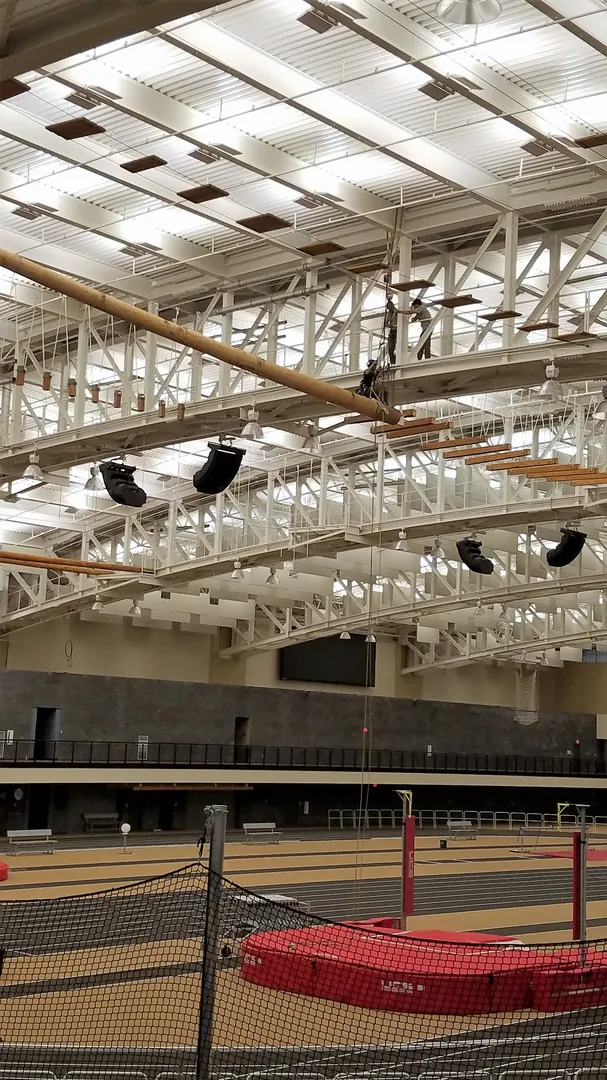
Challenge Design Innovations designs and builds indoor challenge courses, high ropes courses, aerial elements, climbing walls, and bouldering walls for schools, colleges, recreation centers, camps, training facilities, commercial attractions, and other organizations.
An indoor course can take advantage of spaces that might otherwise go unused, including rafters, gym ceilings, elevated platforms, atriums, warehouses, and other high-clearance areas.
Or the adventure can be built directly into the walls with climbing and bouldering features.
CDI can help you determine what works with your building, your participants, and the way you want to use the space.
[Contact CDI About Your Indoor Project]
What Can an Indoor Challenge Course Look Like?
There is no standard indoor course.
Some facilities have a high challenge course suspended within the rafters, allowing participants to move through aerial obstacles high above the floor.
Others combine climbing, ropes course elements, zip lines, team challenges, or bouldering walls into one recreation space.
Indoor courses can include:
- High ropes elements
- Suspended bridges and obstacles
- Team-based challenges
- Climbing walls
- Bouldering walls
- Vertical climbing elements
- Cargo nets
- Rappel elements
- Zip lines where the space allows
- Giant swings or specialty elements
- Continuous or traditional belay systems
- Custom challenges designed around the building
The design starts with the space you already have and what you want participants to experience.
Build Up, Not Out
One of the biggest advantages of an indoor challenge course is the ability to use vertical space.
Gyms, field houses, recreation centers, warehouses, and similar buildings may have significant open space above the activities happening on the floor.
A challenge course may be able to use that space without taking over the entire building.
Depending on the building, elements may be supported by existing structural components or by new structures designed specifically for the course.
That can create opportunities for a course above:
- Gym floors
- Recreation areas
- Training spaces
- Climbing facilities
- Common areas
- Other existing activities
Every building is different, so structural evaluation and engineering are an important part of determining what is possible.
Indoor Climbing & Bouldering Walls
Not every indoor adventure facility needs to be suspended overhead.
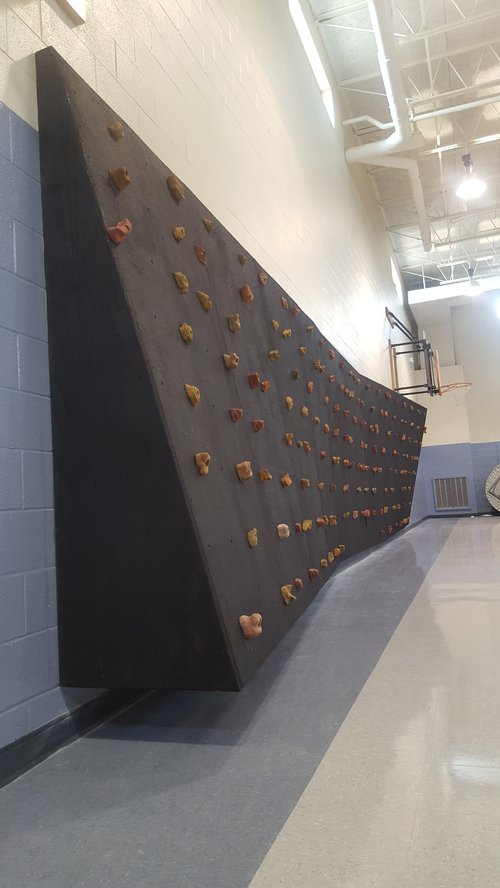
CDI can also design indoor climbing and bouldering walls as standalone attractions or as part of a larger challenge course.
Climbing features can be built along existing walls or incorporated into custom structures.
Depending on your goals, the facility might include beginner climbing routes, more challenging routes, bouldering areas, vertical team activities, or climbing elements that connect with an elevated course.
Combining climbing and challenge course activities can also help a facility offer different experiences within the same space.
Designed Around Your Building
Indoor construction requires a different approach from building a traditional outdoor ropes course.
Before developing a design, CDI looks at factors such as:
- Building dimensions and ceiling height
- Existing structural systems
- Available anchorage locations
- Floor use below the course
- Participant access
- Fall protection
- Rescue access
- Lighting
- HVAC and mechanical systems
- Fire protection systems
- Doors and emergency egress
- Instructor visibility
- Equipment storage
- Future maintenance and inspections
We work with the project team to coordinate the adventure components with the building rather than treating the course as something separate from it.
For existing facilities, that often starts with drawings, photographs, measurements, and an evaluation of the space.
For new construction, getting CDI involved early can provide even more options because the building and adventure features can be planned together with the architects and builders.
New Buildings and Existing Spaces
You do not need to be constructing a new building to add an indoor challenge course.
CDI can evaluate existing facilities to determine whether the space may work for a course, climbing wall, or combination of activities.
If you are planning a new building, involving CDI during the early design phase can be especially helpful.
We can work alongside architects, engineers, contractors, facility managers, and other project partners to consider structural attachment points, ceiling clearance, access, floor space, and other requirements before construction is complete.
That can be much easier than trying to adapt the building later.
A Full-Service Indoor Challenge Course Builder
Challenge Design Innovations can support your project from the first concept through long-term operation.
Our services include:
- Site and building evaluation
- Concept development
- Custom course design
- Engineering coordination
- Construction and installation
- Climbing and bouldering wall construction
- Belay and fall-protection systems
- Operational equipment
- Staff training and certification
- Commissioning inspections
- Annual professional inspections
- Maintenance and repairs
- Course modifications and expansion
CDI has been designing and building challenge courses, climbing facilities, aerial attractions, and custom adventure structures for more than 45 years.
As an ACCT International Accredited Vendor, we can also continue supporting your facility after construction is finished.
Indoor Challenge Course FAQs
How high does a ceiling need to be for an indoor high ropes course?
There is no single minimum height.
It depends on the type of elements, participant clearances, fall-protection system, access method, and how the space below the course will be used.
CDI can review your building dimensions and help determine what may be possible.
Can a ropes course attach to existing building rafters?
Potentially.
Existing structural components must be evaluated to determine whether and how they can support course loads. Engineering and building information are important parts of that process.
In other situations, the course may use independent support structures rather than relying on the existing building.
Can you build an indoor course above a gym?
Yes, depending on the building.
Using the space above an existing gym or recreation area can be an effective way to add programming without consuming additional floor space. Building structure, clearances, access, and other systems must be evaluated first.
Can CDI add an indoor climbing wall to the same facility?
Yes. Indoor climbing walls and bouldering areas can be incorporated into the same project as an indoor challenge course.
This can create several different activity options within one facility.
Can you build inside an existing warehouse or recreation building?
Yes. Existing buildings can often be evaluated for conversion or expansion into adventure and recreation spaces.
The first step is understanding the building dimensions, structure, and intended use.
Does CDI provide inspections and training after construction?
Yes. CDI provides staff training, professional inspections, maintenance, repairs, equipment, and other long-term support for challenge course facilities.
Have an Indoor Space With Potential?
[Talk With CDI About Your Indoor Challenge Course]
Wondering what it might cost? See ourPrice Estimator
Is your site a good fit for a project like this? Use our Site Feasibility Checklist to find out.