Kids Adventure Course Design & Construction
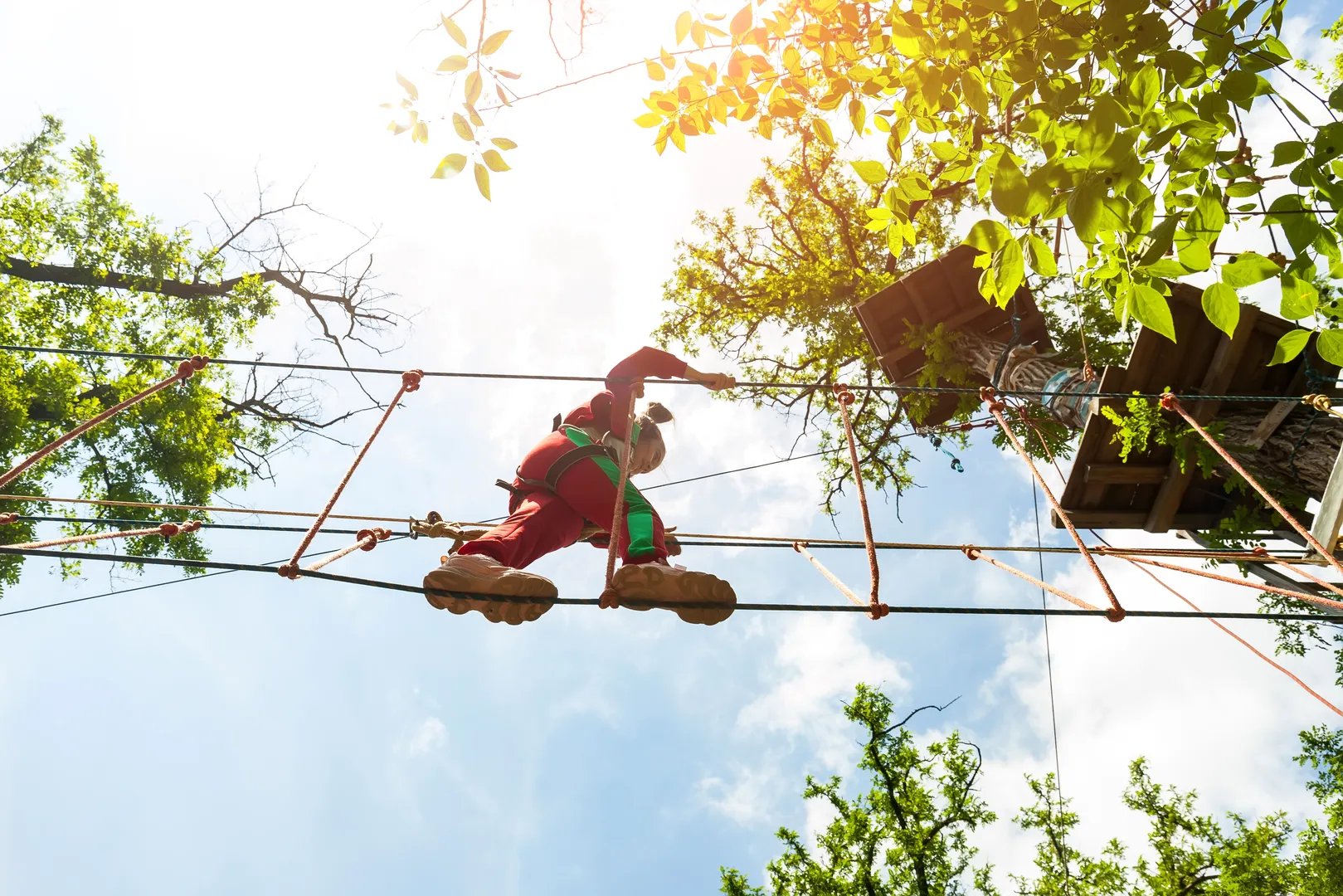
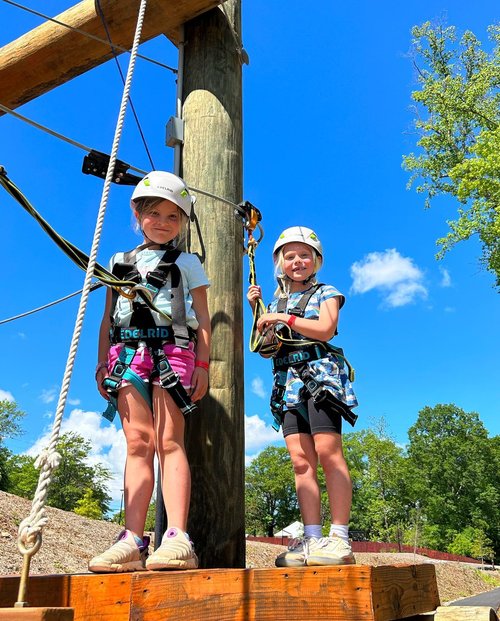
Age-Appropriate Adventure Courses Designed for Younger Participants
Give younger kids an adventure built for them.
Challenge Design Innovations designs and builds custom kids ropes courses, kids adventure courses, and kids zip line courses for camps, parks, resorts, schools, municipalities, campgrounds, and commercial attractions, and others across the United States.
These are not simply smaller versions of an adult ropes course. A good kids course considers reach, height, movement, confidence level, supervision, participant flow, and how children will actually use the course.
CDI has been designing and building challenge courses, zip lines, and aerial adventure parks for more than 45 years. We can help you plan a kids course that fits your property, your audience, your budget, and the way you want to operate it.
Planning a kids adventure course? Talk with CDI about your site and ideas.
What Is a Kids Adventure Course?
A kids adventure course is a ropes course or aerial obstacle course designed around the size and abilities of younger participants.
Depending on the design, children may climb, balance, crawl, cross bridges, move through nets, and ride kid zip lines.
Common elements include:
- Suspension bridges
- Cargo nets
- Balance beams
- Swinging steps
- Rope crossings
- Climbing features
- Tunnels
- Themed obstacles
- Short zip lines
- Multiple challenge levels
Some courses stay fairly close to the ground. Others create a true aerial adventure experience with platforms, harnesses, and a belay system.
There is no single layout that works for every location. The right course depends on who will use it and what you want the attraction to accomplish.
What Ages Are Kids Ropes Courses Designed For?
Instead of choosing one age range and trying to make every child fit it, CDI can design around the ages, heights, abilities, and program goals you expect to serve.
For example, CDI's Sasquatch Hollow Kidz Course at Crater Lake Zip Line was designed for younger participants and includes four zip lines, challenge bridges, a spider web crossing, and a slide.
At Flying Rabbit Adventures, CDI built Orville's Kids Course with 10 beginner-friendly obstacles and a kid-sized zip line.
Your course may serve younger children who are not ready for your main aerial park, or it may become a larger attraction designed specifically around families.
What Type of Kids Ropes Course Should You Build?
Before choosing obstacles, it helps to decide what role the course needs to play at your property.
A Standalone Kids Adventure Course
A standalone course can become a destination of its own for:
- Summer camps
- Municipal parks
- Schools
- YMCAs
- Resorts
- Campgrounds and RV parks
- Zoos and science centers
- Family entertainment businesses
It can give younger participants an outdoor activity built specifically around them.
A Kids Course Beside an Existing Adventure Park
If your main ropes course or aerial adventure park has age, height, or reach requirements, younger siblings may have little to do while older family members participate.
Adding a kids course can help you serve more of the family.
It can also give children a place to build confidence before moving into larger aerial attractions as they grow.
A Kids Zip Line Course
For some properties, the main attraction is the zip line experience.
A kids zip course may combine several shorter zip lines with bridges, climbing features, nets, and other obstacles between them.
The experience can feel like a real zip line adventure while keeping the design appropriate for younger participants.
A Low-Level Adventure Course
Not every children's course needs to be high in the air.
Low-level courses can use balance, climbing, movement, and problem-solving challenges while keeping the experience closer to the ground.
This can work well for camps, schools, parks, and programs where the goal is participation and fun rather than height.
How Do You Plan a Kids Adventure Course?
The best time to make important decisions is before construction starts.
CDI works with you to understand how the course needs to function, not just what it should look like.
Start With Your Participants
Think about:
- Target age range
- Participant height and reach
- Expected group sizes
- Ability levels
- Whether adults need to accompany children
- Accessibility goals
- Desired level of challenge
A course for young campers may need a very different design from a commercial kids attraction operating beside a large aerial adventure park.
Look at Your Site
You do not always need a large amount of land.
Depending on the design, kids courses can be built using trees, poles, custom structures, or a mix of support systems.
CDI can help evaluate:
- Available space
- Trees
- Terrain
- Drainage
- Access
- Utilities
- Participant entry and exit
- Staff access
- Emergency access
- Viewing areas for parents or caregivers
- Space for future expansion
If you are still evaluating possible locations, start with our Site Feasibility Checklist before requesting a professional site review.
[Use the Site Feasibility Checklist]
Think About Operations Before You Build
How the course operates can be just as important as the obstacles themselves.
Consider:
- How participants enter and leave the course
- How many people you want to accommodate
- How staff will supervise participants
- Whether staff need access to participants on the course
- How children will be trained before starting
- How parents or caregivers can watch
- What personal protective equipment will be required
- What type of belay system fits the course
- How rescues or participant assistance will be handled
- How the attraction connects with the rest of your property
Good design can make everyday operation much easier.
Choose the Right Belay System
Some kids aerial courses use continuous belay systems that allow participants to remain connected while moving through the course.
Other course types may use different systems or operating methods.
CDI can help you compare your options based on participant age, course design, staffing, operating model, and applicable standards.
Why Build a Course Just for Younger Kids?
For commercial attractions, a kids course can help fill an important gap.
A family may include an adventurous teenager, two adults, and a six-year-old. If the youngest child cannot participate, that can affect what the entire family chooses to do.
A well-designed children's adventure course gives younger guests something made for them.
It can help:
- Expand the age range your attraction serves
- Give families more activities to choose from
- Create an entry-level adventure experience
- Keep younger siblings involved
- Add another activity for camps and groups
- Encourage repeat visits as children progress to larger courses
- Make better use of unused areas of your property
For camps, schools, YMCAs, and youth programs, the goals may be different.
Your course might focus more on movement, confidence, problem solving, outdoor recreation, or group programming.
The design should support your reason for building it.
Why Choose CDI to Design and Build Your Kids Course?
A kids course may look playful, but designing one well requires serious thought.
Challenge Design Innovations has more than 45 years of experience designing and building ropes courses, challenge courses, zip lines, and aerial adventure attractions.
CDI is an ACCT International Accredited Vendor, and our team has experience with projects throughout the United States.
And we do not disappear after opening day.
We build long-term relationships with our clients and can continue helping with inspections, repairs, training, equipment, and changes to your course as your program grows.
See Real CDI Kids Course Projects
Want ideas for your own project?
Take a look at kids courses CDI has already designed and built, including:
- Charleston County Parks Kids Zip Adventure Course
- Sasquatch Hollow Kidz Course at Crater Lake Zip Line
- Orville's Kids Course at Flying Rabbit Adventures
- Additional kids courses built for camps, commercial attractions, municipalities, and recreation businesses
Kids Ropes Course FAQs
How much does it cost to build a kids ropes course?
The cost depends on the size of the course, number and type of elements, support structures, zip lines, belay system, engineering needs, site conditions, and the amount of equipment required.
A small kids course and a large commercial children's aerial adventure park can have very different budgets.
If you are trying to establish an early budget, use CDI's Project Price Calculator or contact us to discuss what you are considering.
How much land do I need for a kids adventure course?
There is no standard amount of land required. Some children's adventure courses can fit into compact spaces, while others spread through a larger wooded area.
The shape and condition of your available space can matter as much as total acreage.
Can you add a kids course to an existing aerial adventure park?
Yes. A kids course can be designed as an expansion to an existing ropes course, zip line attraction, or aerial adventure park.
CDI can also work on facilities originally built by other companies.
Can a kids ropes course include kid zip lines?
Yes. Kids adventure courses can include shorter zip lines along with bridges, nets, balance challenges, climbing elements, and other obstacles.
Do kids courses use harnesses?
Some do and some do not.
It depends on course height, design, operating model, and the safety system being used. CDI can help determine which approach makes sense for your project.
Can adults go on a kids course with their children?
That depends on the design.
If adult participation or parent assistance is important to your operation, tell us early in the planning process. We can account for that when discussing the course layout, structures, equipment, and operating model. Some courses we design so the parent can walk along next to the course to offer encouragement and a helping hand.
Can CDI build a themed kids ropes course?
Yes. Elements, structures, signage, colors, and obstacles can be designed around a theme.
Does CDI work nationwide?
Yes. CDI designs and builds adventure facilities for clients across the United States. You do not need to choose a builder simply because they are located close to your property.
What should I do before contacting a kids ropes course builder?
Start by thinking about your target age group, available space, goals, expected number of participants, timeline, and approximate budget.
You can also complete CDI's Site Feasibility Checklist to organize some of that information before we talk.
Wondering what it might cost? See our Price Estimator
Ready to take the next step?
Contact us today to explore how we can help you create a world-class challenge course that meets your needs and inspires your participants.
Is your property a good fit?Use our Site Feasibility Checklist to find out