7 Benefits of Building Challenge Courses for City, County, and State Parks
Dec. 18, 2025
Challenge courses [also called ropes courses or aerial adventure parks] can help public parks serve more people, create safer skill-building play, and bring in new funding. Challenge Design Innovations [CDI] designs, builds, inspects, trains, certifies, and equips challenge courses and related adventure facilities nationwide.
Why a Challenge Course Works in a Public Park
What it is
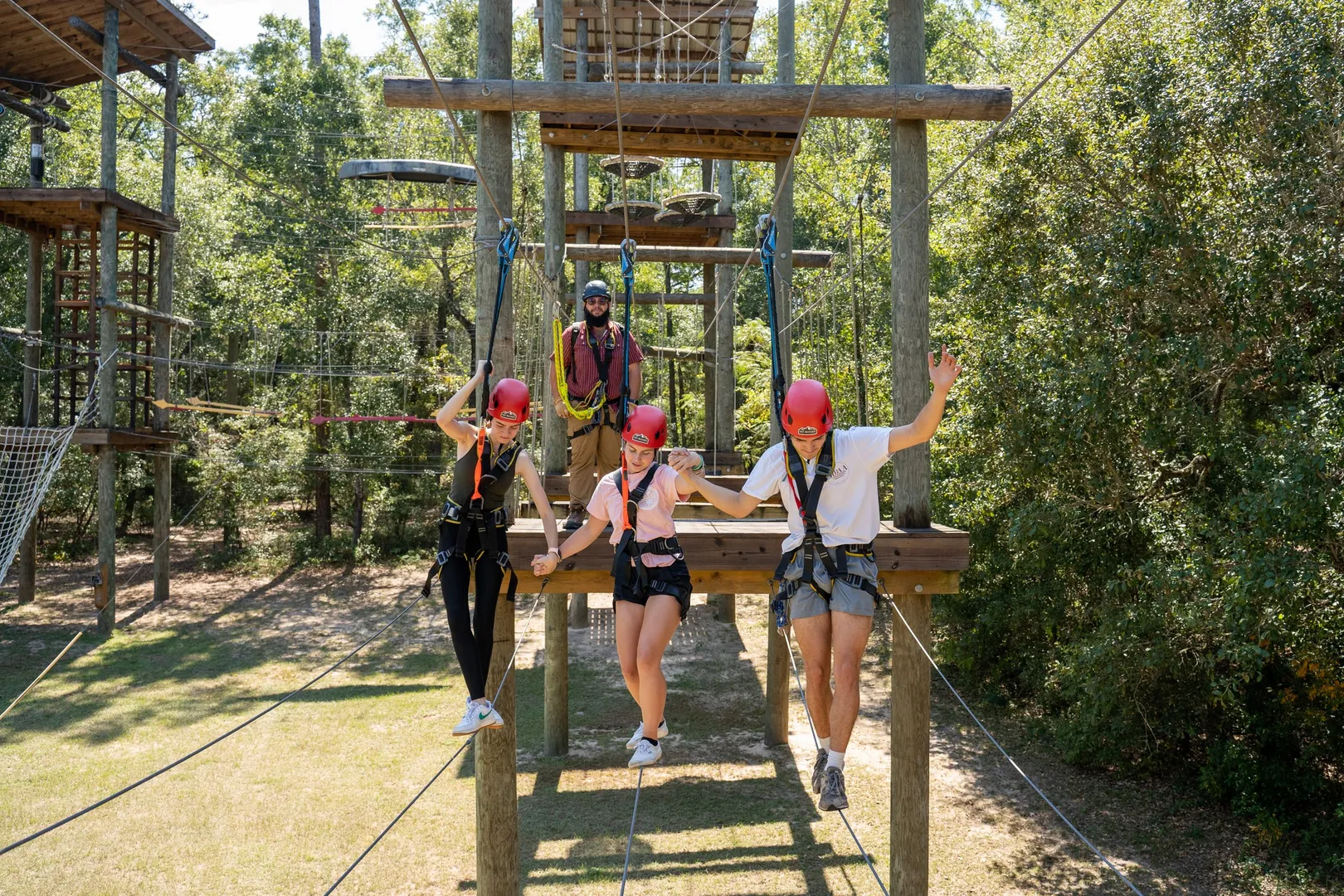
In a city, county, or state park, a challenge course is a set of physical elements that help people build balance, confidence, and problem-solving skills. It can include:
- Low elements close to the ground
- High elements on platforms and cables
- Zip lines
- Team-building elements for groups
- Specialty sections just for younger kids
Who uses it [and why it matters]
A park-based challenge course can serve:
- Families looking for active fun
- Youth groups and schools
- Camps and after-school programs
- Community groups and local events
- Visitors traveling to your area
When parks add activities that get people moving and socializing, communities see health and connection benefits. (CDC)
More Visits, Longer Stays, Stronger Park Value
1) It increases attendance and repeat visits
A challenge course gives people a clear reason to come back. It is not just a trail or a playground, it is a “let’s do that again” experience.
- More family outings
- More school field trips
- More group reservations
- More return visits as kids “level up” their skills
2) It creates flexible revenue options [without changing the park’s mission]
Parks can fund and sustain recreation in different ways, depending on policy:
- Program fees for staffed sessions
- Group rentals for schools and nonprofits
- Special events and community partnerships
- Sponsorships and grants tied to youth, wellness, and tourism goals
Investments in park facilities can also support local economic activity. (CDC)
Better Health, Better Community Connection
3) It supports physical health and mental wellbeing
Challenge courses get people outside and moving. Parks and green spaces help people be active and improve physical and mental health. (CDC) Many people also report feeling better mentally after time in parks. (NRPA)
4) It builds social connection across ages
Challenge courses work best when people encourage each other. That is a big deal for public spaces.
- Families cheer each other on
- Teens mentor younger kids
- Groups learn teamwork in a fun setting
- Communities gather around shared challenges
Parks support social connection by giving people places to spend time together. (CDC)
Youth Skills, Inclusive Recreation, and Stronger Programming
5) It builds youth skills parks already care about
A well-designed course supports skills like:
- Confidence and safe risk-taking
- Focus and self-control
- Communication and teamwork
- Problem-solving
These outcomes fit naturally with park education goals, summer programs, and youth development partners.
6) It can be designed for broad access and many ability levels
“Challenge by choice” matters in public parks. Good design offers:
- Multiple paths [easier to harder]
- Low elements for beginners
- Clear rules and signage
- Space for spectators and caregivers
- Inclusive features where possible
CDI’s design approach considers participant demographics, staffing levels, operational preferences, and the site itself, so the final course matches your community.
Safer Operations Through Standards, Training, and Annual Inspections
7) It strengthens safety culture and reduces preventable issues
Public parks need public trust. A challenge course program works best when you plan for:
- Clear operating procedures
- Staff training that matches your course and your audience
- Ongoing maintenance planning
- Regular professional inspections and documentation
CDI provides inspection services that include detailed evaluation of equipment and course elements, real-time feedback, and a written report.
What CDI can do for your park [design to long-term support]
If you want a single partner from concept to ongoing operations, CDI can support you with:
- Design and construction for your site and goals
- Staff training and certification support
- Annual inspections and third-party inspections [including courses built by others]
If you manage a city, county, or state park and want to explore a challenge course, start with a free site conversation. CDI can help you choose the right course type, plan staffing, and build a long-term inspection plan that fits your budget and policies.
People Also Ask: Challenge Course FAQs for City, County, and State Parks
Quick answers for park leaders
- How much does a challenge course cost for a public park?
- Cost depends on size, height, number of elements, access needs, and site conditions. A good next step is a concept plan and budget range based on your park’s goals. Smaller courses can start around $150,000 and go up to $900,000+ for very large programs.
- Do challenge courses work in small parks?
- Yes. Low elements, compact layouts, and phased builds can fit smaller footprints and smaller budgets.
- What age groups can use a park challenge course?
- It depends on the design. Many parks plan zones, so younger kids, teens, and adults each have appropriate options.
- Can a challenge course be built to be more inclusive?
- Often, yes. Designers can add choices, lower elements, and accessible pathways where feasible. Your site and local requirements guide the best approach.
Operations, safety, and maintenance questions
- Do challenge courses need annual inspections?
- Yes, especially to meet industry and professional standards and insurance expectations. CDI describes annual inspection practices and reporting as part of its inspection services.
- Can we get an inspection if another company built our course?
- Yes. CDI routinely inspects courses built by other companies and also offers third-party inspections.
- What training do park staff need to operate a challenge course?
- Staff training should match the course design, your operating model [self-guided vs staffed], and your safety procedures. CDI offers staff training as part of its long-term support.
- What is the biggest mistake parks make with challenge courses?
- Treating it like a “build it once” project. The best programs plan operations, maintenance, and inspections from day one.
CDI founder, Jim Wall, on the passing of his friend and Industry leader Karl Rohnke
SC has one of the best aerial parks in the nation, USA Today says.