Nature-Based Adventure Parks Are Replacing Water Parks for Family Vacations
Families are looking beyond crowded water parks for vacation experiences that feel more active, natural, and memorable. A recent Islands article,“Goodbye Busy Waterparks, This Nature-Filled Alternative Is Taking Over Vacations”, By Rachel-Jean Firchau, points to the growing appeal of nature-based adventure parks, where visitors can enjoy zip lines, ropes courses, climbing elements, bridges, and other outdoor challenges.
The appeal is easy to understand. People want fresh air, movement, and a chance to try something new. They want to unplug and come home with a story to tell, not just another day spent in a highly built-out attraction.
At Challenge Design Innovations, we have seen this shift firsthand. Since Jim Wall built his first ropes course and zip line in North Carolina in 1980, CDI has helped create aerial adventure parks, challenge courses, climbing walls, and zip lines for camps, resorts, campgrounds, parks, schools, colleges, and other outdoor destinations.
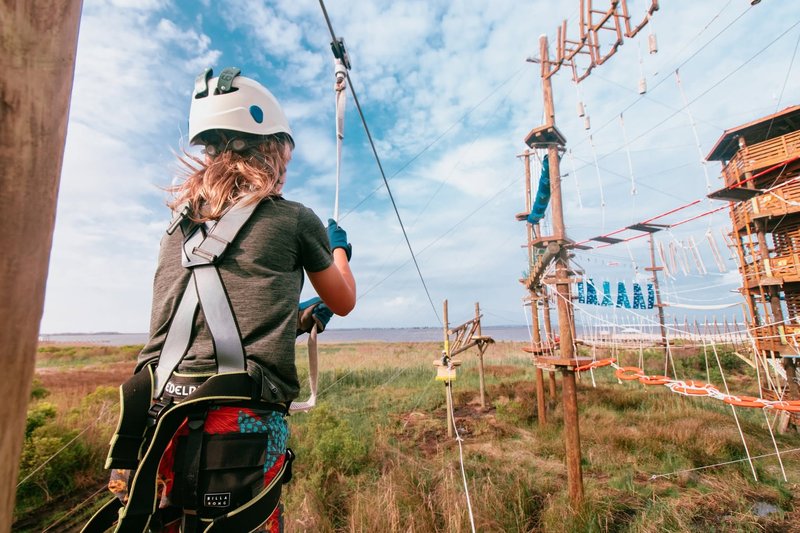
These projects do more than add an attraction. A well-designed course can give guests another reason to visit, stay longer, return, and recommend a destination to others. It can turn a campground into a destination, give a resort a stronger identity, or provide a school or college with a meaningful tool for recreation and group development.
But building an adventure park takes more than placing obstacles in the trees. The design must account for the site, guest flow, tree health, age and ability ranges, staffing, rescue access, inspections, maintenance, capacity, and future expansion. A course may look exciting in a photo and still be difficult to operate if those details are overlooked.
That is why CDI works with clients from concept and design through construction, training, inspections, repairs, and long-term support. The goal is to create a course that fits the land, works for the operator, and gives guests an experience worth remembering.
Nature-based adventure parks are not simply replacing water parks. They are expanding what a family vacation can be: active, scenic, challenging, and connected to the outdoors. For destinations ready to offer that kind of experience, thoughtful design makes all the difference.
FAQ
What did the Islands article say about adventure parks?
The Islands article said travelers are moving beyond busy water parks and looking for nature-based adventure parks with zip lines, obstacle courses, climbing routes, bridges, swings, and other outdoor challenges.
Why are nature-based adventure parks becoming popular?
They give guests outdoor activity, scenic settings, different challenge levels, and a break from crowded, highly built-out attractions. They also create memorable vacation experiences.
What is an aerial adventure park?
An aerial adventure park is an outdoor course with elevated obstacles, platforms, bridges, zip lines, climbing elements, and other challenges. Courses may be built in trees, on poles, or with a mix of both.
Does Challenge Design Innovations build aerial adventure parks?
Yes. Challenge Design Innovations designs, engineers, builds, trains, inspects, repairs, and supports aerial adventure parks, ropes courses, challenge courses, zip lines, climbing walls, and other outdoor adventure structures.
What makes CDI experienced in this type of work?
CDI has decades of hands-on experience in ropes course and zip line design, construction, inspection, maintenance, training, and operations support. The company’s roots go back to 1980, when Jim Wall built his first ropes course and zip line in North Carolina.
Can an aerial adventure park help a campground or resort?
Yes. A well-planned aerial adventure park can give guests another reason to stay on-site, return in the future, and talk about the destination with others.
Should every adventure park be custom designed?
We think so. The best adventure parks are designed around the site, theme, audience, terrain, trees, staffing plan, budget, and long-term goals. A course should fit the site instead of feeling copied from somewhere else.

What’s the Best Helmet for Zip Lines and Aerial Adventure Parks?
Expert Challenge Course Rebuilds: Why Challenge Design is the Leader in Restoring Legacy Courses