Third-Party Inspection Before Buying a Course, 7 Advantages You Can’t Afford to Miss
When you buy an existing course, you also buy its history. You inherit past maintenance habits, past decisions, and any problems that were missed or postponed.
That is why a third-party inspection is one of the smartest moves you can make. It gives you an objective baseline, a clear action plan, and the documentation you need to operate with confidence.
We’ll walk you through 7 advantages of hiring a third-party inspection for a course you are going to buy, plus how to make the report actually useful for your team.
Why pre-purchase inspections matter more than you think
A seller walkthrough is not the same thing as an independent evaluation. A third-party inspector looks at the course with fresh eyes and a consistent method. That matters most when ownership changes hands, because systems tend to drift over time.
Sure, the previous owner was getting the course inspected (if not, that is a problem), and may be sharing the inspection reports with you. If they are not, ask for copies of the reports.
You want a “day-one condition” record. Think of it like a home inspection, but for a high-consequence experience where guests and staff trust you with their safety.
What “third-party” should mean
A true third-party inspector is independent from the seller, and ideally independent from the original builder. They should have documented qualifications and experience with your course type, whether that is a challenge course, canopy tour, or aerial adventure course. They should also align their process with recognized industry standards. Challenge Design Innovations has the experience and expert staff to conduct this type of inspection.
Learn more about CDI inspections: https://www.challengedesign.com/inspections/
If you want a starting point for industry context, look at ACCT International and its standards resources: https://www.acctinfo.org/
If you run an aerial adventure course, you may also see references to ASTM F2959, which covers standard practice for aerial adventure courses: https://www.astm.org/f2959-22.html
Advantage 1 and 2, find hidden issues and confirm standards compliance
Advantage 1, you uncover issues that do not show up in your walk through
A course can look fine from the ground and even on platform decks but still have critical issues up close. Small defects, deferred maintenance, and undocumented modifications add up. A third-party inspection helps you catch problems before they become downtime or incidents.
Here are a few common “ownership change” issues inspectors often find:
- Unrecorded changes to elements, cables, anchors, or participant flow
- Hardware substitutions that create compatibility concerns
- Wear and corrosion in places staff rarely see
- Wood decay or structural concerns that were not documented
- Past repairs that were well-intended but not done to spec
Advantage 2, you confirm compliance with the standard of care
It is not just “is it safe,” it is “can we show we followed accepted practice.” Standards commonly referenced in this space include ANSI/ACCT for challenge courses and zip line tours, and ASTM F2959 for aerial adventure courses. Your inspector should be able to explain what they are referencing and why.
ACCT’s standards page is a helpful reference point: https://www.acctinfo.org/products/ansi-acct-standards
A quick tip that makes inspection findings easier to act on
Ask the inspector to prioritize findings clearly, for example:
- Stop-use hazards
- Fix before opening
- Fix within a defined timeframe
- Monitor and re-check
This turns a report into a plan. CDI gives you a report you can act upon.
Advantage 3, get documentation that helps with insurance and liability
If an incident happens, your documentation matters. A third-party inspection report can become one of your most valuable records, especially right after a purchase when your own logs are still new and likely slim.
A strong report does not just list problems. It shows your process and your response.
Here is what we recommend you ask for:
- Scope, date, and conditions of the inspection
- Inspector qualifications and method
- Standards referenced (for example ANSI/ACCT and or ASTM F2959)
- Photos tied to findings
- Clear corrective actions, not vague notes
- A summary page you can share with leadership and insurers
ACCT’s accreditation and operations resources also reinforce that third-party inspection is a normal part of responsible operations: https://www.acctinfo.org/operation-accreditation-faq
A note on worker safety and your duty of care
Your guests are not the only people at risk. Your staff work around height, tools, hardware, and moving systems. US workplace safety expectations, including the general duty concept, make it even more important to identify hazards and correct them in a documented way.
If you want a plain-language overview, the Congressional Research Service has a useful summary related to the OSH Act and employer duties: https://www.osha.gov/sites/default/files/publications/OSHA3845.pdf
Advantage 4 and 5, prevent downtime and build a real repair budget
Advantage 4, you reduce surprise closures
Emergency fixes cost more. They also hit you when it hurts most, like peak season or a big group booking. A pre-purchase inspection (or post-purchase inspection) lets you schedule corrections before the course is under pressure.
Advantage 5, you turn unknowns into a real capital plan
New owners often under-budget repairs because “it looks fine.” The inspection converts that guess into a prioritized list you can price out and schedule.
A simple way to use the report is a 30-60-90 plan:
- First 30 days: stop-use hazards, documentation gaps, must-fix items
- Next 60 days: medium-priority corrections, signage updates, consistency improvements
- Next 90 days: longer projects, upgrades, throughput improvements, refresh work
One practical add-on, inventory your common spare parts and check lead times. If a repair depends on a specialty component, you want to order early.
Advantage 6, strengthen training and operating consistency fast
When you buy an existing course, you often inherit a mix of staff habits. Some are excellent. Some are risky. And many are likely undocumented.
Advantage 6, a third-party inspection helps you tighten training and SOPs
This includes opening checks, pre-use checks, participant screening, rescue access, and documentation. The inspection findings give you a concrete list of what to train, what to reinforce, and what to stop doing.
This matters because many issues are not “hardware problems.” They are process problems, like inconsistent clipping checks, unclear signage, or staff shortcuts that became normalized.
Here’s how to use the report without making staff defensive:
- Hold a short meeting focused on the top risks and why they matter
- Update checklists using the inspector’s language
- Practice rescue scenarios that matches your actual layout
- Assign an owner to each corrective action, with a due date
If you want to go beyond the physical inspection, consider an operational review, especially if you changed management, staffing, or daily procedures after purchase.
Note, that Challenge Design also provides expert staff training services: https://www.challengedesign.com/training-certification/
Advantage 7, build trust with guests, partners, and regulators
Even if your state does not regulate these courses heavily, you still benefit from being able to show responsible oversight. And if your location does have requirements, an independent report can make those conversations smoother.
Advantage 7, you earn trust faster because you can prove what you did
That matters to:
- Insurers and underwriters
- Landowners, boards, and university leadership
- Camps and group clients
- Risk managers
- Sponsors and partners
- Program partners
How to talk about inspections without scaring customers
Keep it simple and confident:
- Explain that third-party inspection is routine professional practice
- Share a short summary of improvements completed
- Share your timeline for remaining work
- Avoid technical details that confuse guests
Most people are reassured when they see you take safety seriously and act on findings.
Next steps
A third-party inspection before or right after purchase is not just a formality. It is your fastest way to reduce risk, protect your budget, and set your operation up for consistent performance.
You get:
- A clear picture of what you bought
- Confidence in standards alignment
- Documentation that supports insurance and liability needs
- A repair plan that prevents surprises later on
- Better training, tighter procedures, and fewer “we always did it this way” habits
- More trust from guests, staff, and stakeholders
Contact Challenge Design Innovations (CDI) for a third-party inspection.
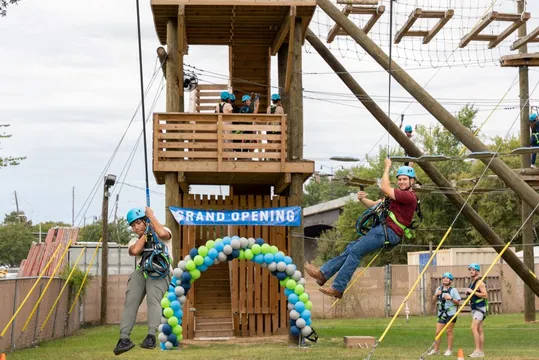
Center for Outdoor Recreation and Education celebrates grand opening
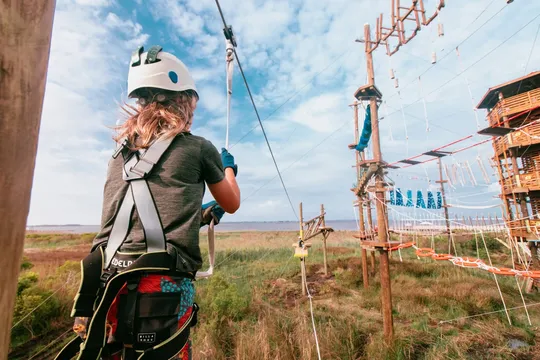
Nature-Based Adventure Parks Are Replacing Water Parks for Family Vacations