Rubber Mulch vs. Wood Mulch vs. Sand: What's Best for Your Challenge Course?
Choosing the right ground surface for a challenge course or obstacle course comes down to three things: safety, cost, and maintenance.
■ Rubber mulch is often our first choice because it lasts longer and needs less upkeep.
■ Engineered wood fiber costs less upfront but requires more maintenance.
■ Sand can work well for certain low-to-the-ground obstacles.
There's no single material that's best for every course. The right choice depends on how your course is designed, how people will use it, and how far someone could fall.
Why Does Ground Surfacing Matter?
If you're planning a new challenge course, you're probably thinking about the obstacles, layout, and overall cost.
The ground beneath those obstacles might not be at the top of your list.
But it deserves some attention.
People fall. Even on low ropes courses and obstacles that are only a few feet off the ground.
And what they land on can make a big difference.
We've been designing and building challenge courses for more than 45 years at Challenge Design Innovations (CDI). One of the decisions we make during the design process is what type of ground surface belongs beneath each element.
Sometimes that's rubber mulch. Sometimes wood fiber. And occasionally, sand makes the most sense.
Here's how we decide.
Why We Often Recommend Rubber Mulch
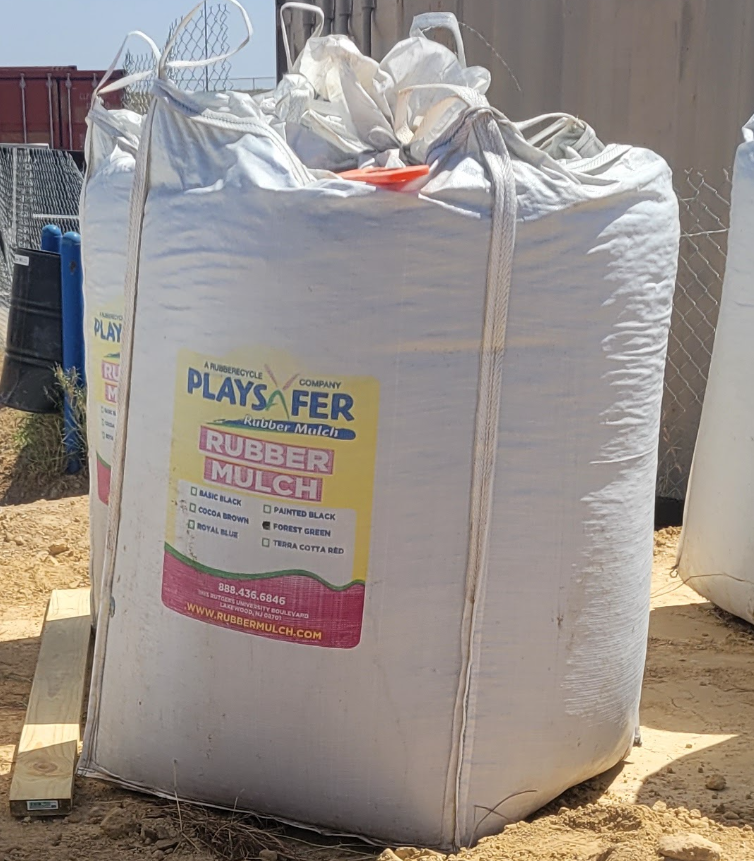
Rubber mulch is a popular choice for low ropes courses, obstacle courses, and other areas where participants could fall.
It's made from shredded rubber and is designed to help absorb the force of a fall.
We like rubber mulch for several reasons:
- Less maintenance. It doesn't rot or break down like wood mulch.
- Longer life. It generally lasts longer than wood-based materials.
- Good drainage. Rubber doesn't absorb water like wood does.
- Consistent cushioning. Properly installed and maintained rubber mulch can provide reliable fall protection.
- Fewer pests. It doesn't provide food for wood-boring insects.
But there's a tradeoff.
Rubber mulch usually costs more upfront. It can also become hot in direct sunlight.
And the product matters. We recommend using rubber mulch specifically tested for playground safety, rather than ordinary landscape rubber.
For many of our clients, the lower maintenance makes the higher initial cost worthwhile.
What About Engineered Wood Fiber?
Engineered wood fiber (EWF) is another good option.
It looks like regular wood mulch, but it's made specifically for use beneath playgrounds and similar equipment.
Its biggest advantage is price.
If you're building a course on a tight budget, engineered wood fiber can help keep initial costs down.
It also has a natural appearance that works well at camps, parks, and outdoor education centers.
But wood fiber needs attention.
Over time, it breaks down, compacts, and gets pushed away from high-traffic areas. You'll need to rake it, check its depth, and add more as needed.
We've seen how quickly surfacing can change in areas where participants land or step off obstacles every day.
That means planning for maintenance from the beginning.
For organizations with grounds crews or staff who can handle regular upkeep, engineered wood fiber may be a practical choice.
When Does Sand Make Sense?
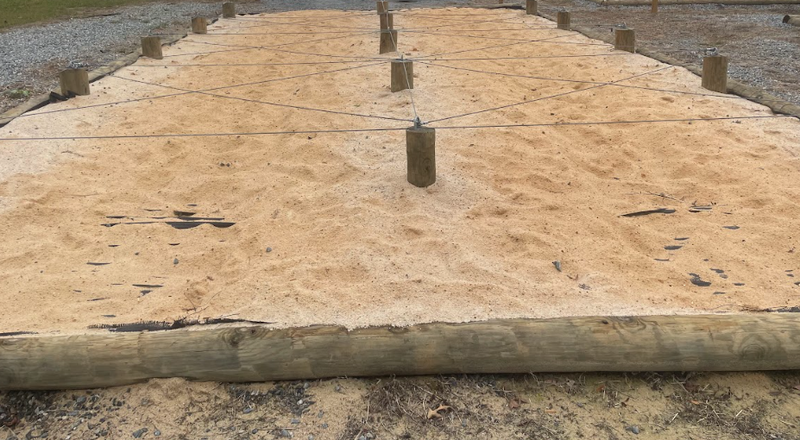
We sometimes use sand beneath obstacles that stay very close to the ground.
For example, military and ROTC obstacle courses may include belly crawls or low-wire obstacles where participants move along the ground.
Sand can be useful in these areas.
It's relatively inexpensive and easy to spread. It also works well for crawling activities.
But sand moves around.
Participants can push it out of place, rain can wash it away, and heavy use can create uneven spots.
It also needs enough depth to provide the required cushioning.
We generally wouldn't choose sand as the main fall surface for a course with higher obstacles without carefully checking its tested performance.
How Deep Should Safety Mulch Be?
Here's something we always want clients to understand:
The material alone doesn't determine how well the ground protects someone. The depth matters, too.
A surface that provides good protection at the right depth may offer much less protection after material has been pushed aside or washed away.
You'll sometimes see rubber mulch advertised as providing fall protection from heights up to 10 or 12 feet.
That doesn't mean every rubber mulch product works at every depth.
The actual protection depends on the product's testing, installation, and condition.
ASTM F1292 is a standard used to measure how well playground surfacing absorbs the force of a fall.
One important measurement is called critical fall height. In simple terms, it tells us the maximum fall height a tested surface is rated to protect against, based on head-impact testing.
For course owners, the takeaway is simple:
Choose surfacing based on your course's fall heights and the manufacturer's test results. Then maintain it at the required depth.
Don't Forget About Maintenance
Whatever material you choose, someone needs to keep an eye on it.
During routine maintenance, pay attention to:
- Thin spots beneath obstacles
- Areas where material has been pushed aside
- Drainage problems or standing water
- Exposed roots, rocks, or other hard objects
- Changes in surface depth after heavy use or storms
Even rubber mulch can shift over time.
And a surface that was properly installed two years ago may need attention today.
So, Which Surface Would We Choose?
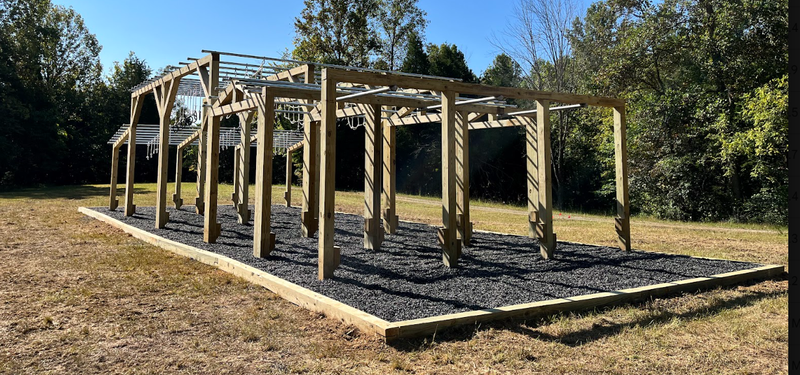
For many low ropes and obstacle course projects, rubber mulch is our preferred option because of its durability and lower ongoing maintenance.
But we also know every client has a different budget, property, and maintenance plan.
Sometimes engineered wood fiber is the better fit. Sometimes sand makes sense for specific obstacles.
At CDI, we consider those details when designing your course, so you're thinking about long-term upkeep before construction even begins.
Planning a new challenge course or upgrading an existing one? Contact Challenge Design Innovations to talk through your options.
Frequently Asked Questions
Is rubber mulch safer than wood mulch?
Both can provide effective fall protection when properly tested, installed, and maintained. The biggest differences are cost, durability, and maintenance needs.
How long does rubber mulch last?
Rubber mulch generally lasts much longer than wood mulch because it doesn't decompose. However, it still needs regular inspections and occasional redistribution or replacement.
Can I use regular landscaping mulch beneath a challenge course?
We don't recommend it. Use surfacing specifically designed and tested for impact protection. Ordinary landscaping mulch may not provide the required cushioning.
Does rubber mulch need maintenance?
Yes. Although it requires less upkeep than wood fiber, rubber mulch can still shift, become contaminated, or lose depth in busy areas.
Can I add rubber mulch to an existing obstacle course?
Often, yes. But you'll need to evaluate the existing ground, drainage, fall heights, and containment before installation. Adding mulch without proper preparation may not provide the protection you expect.
Let us know if you need mulch for your course.

2019 USA Today 10 Best Winners

Best of the Blue Ridge 2026
